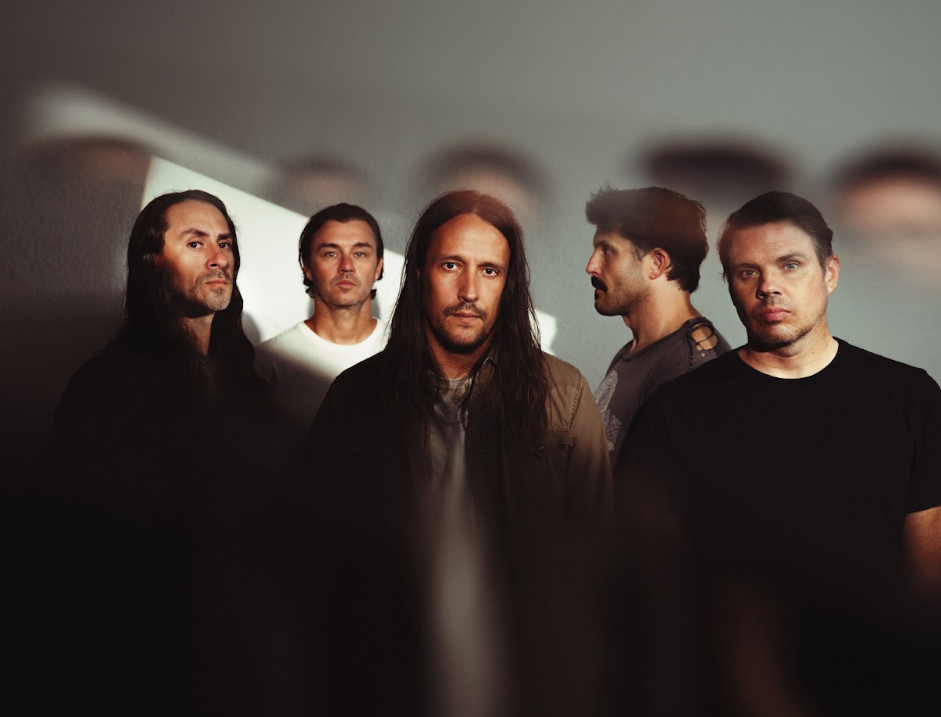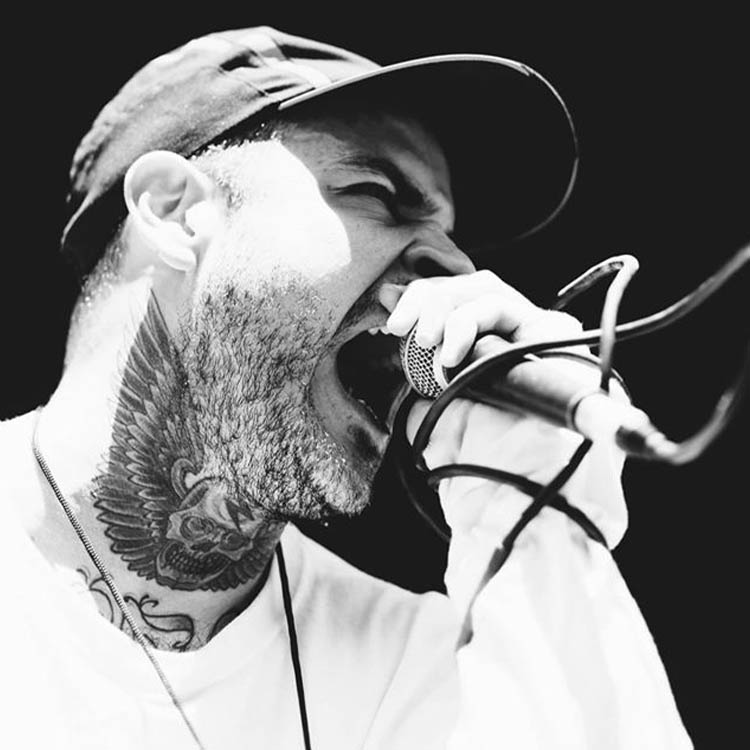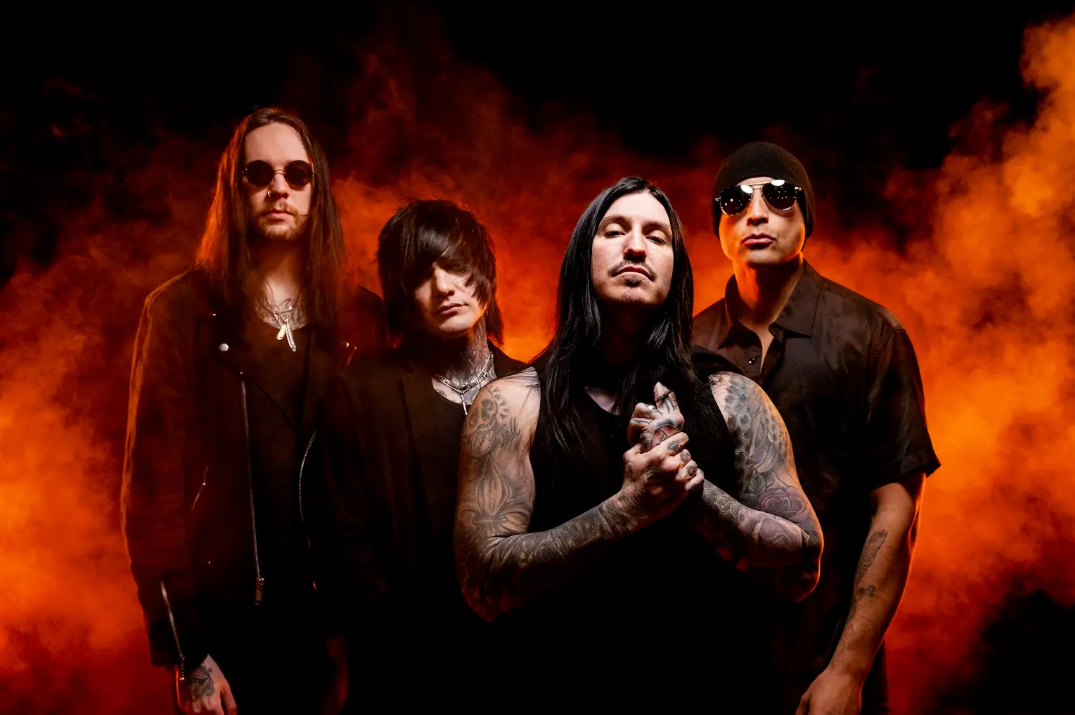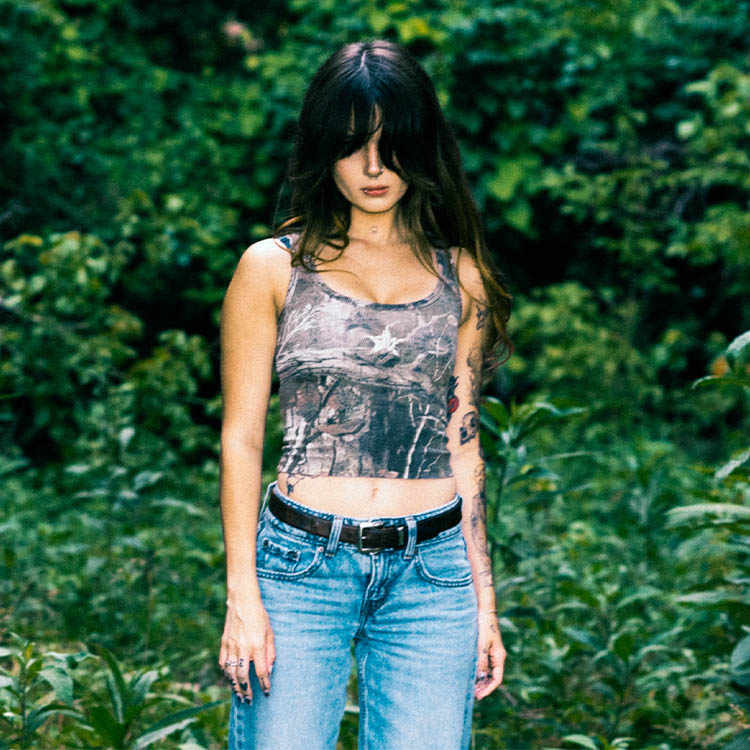
Lineup

Foo Fighters
When Foo Fighters released a debut album written and recorded entirely by leader Dave Grohl — at that point known only as the powerhouse drummer for Nirvana — in the summer of 1995, few would have guessed that the group would wind up as the one band to survive the ’90s alt-rock explosion unscathed. Other bands burned brighter but flamed out, breaking up after scoring a hit or two, while the Foos steadily racked up success after success, filling stadiums around the world while staying on top of the charts all the way into the second decade of the new millennium. Once the band’s lineup coalesced around the time of its third album in 1999, Foo Fighters’ sound also gelled into a recognizable signature built upon the heavy, melodic, loud-quiet-loud template of the Pixies and Nirvana, the modern rock anchored by a love of classic guitar rock. It was commercial without pandering, creatively restless without being alienating, a sound with wide appeal delivered by a band that was happy to tour and record the way bands did back in the ’70s. When Wasting Light became their first number one album in America upon its release in the spring of 2011, it was confirmation that Foo Fighters were survivors who had earned a large, devoted audience primarily through hard work.
All of this industriousness stems from Dave Grohl, who had been playing guitar and writing songs long before he began drumming. Throughout his early teens he performed in a variety of hardcore punk bands and in the late ’80s he joined the Washington, D.C.-area hardcore band Scream as their drummer. During Scream’s final days, Grohl began recording his own material in the basement studio of his friend Barrett Jones. Some of Grohl’s songs appeared on Scream’s final album, Fumble. Following the band’s 1990 summer tour, Grohl joined Nirvana and moved cross-country to Seattle.
After Nirvana recorded Nevermind, Grohl went back to the D.C. area and recorded a handful of tracks that would appear on Pocketwatch, a cassette released by Simple Machines. For most of 1992, he was busy with Nirvana, but when the band was off the road, he recorded solo material with Jones, who had also moved to Seattle. The pair kept recording throughout early 1993, when Grohl returned to Nirvana to record In Utero. Grohl had toyed with the idea of releasing another independent cassette in the summer of 1993, but the plans never reached fruition. Following Kurt Cobain’s suicide in 1994, the drummer kept quiet for several months. In the fall of 1994, Grohl and Jones decamped to a professional studio and recorded the songs that comprised Foo Fighters’ debut album in a week. Boiling down his backlog of songs to about 15 tracks, Grohl played all of the instruments on the album. He made 100 copies of the tape, passing it out to friends and associates. In no time, Grohl’s solo project became the object of a fierce record company bidding war.
Instead of embarking on a full-fledged solo career, Grohl decided to form a band. Through his wife he met Nate Mendel, the bassist for Sunny Day Real Estate. Shortly before the pair met, Jeremy Enigk, the leader of Sunny Day Real Estate, had converted to Christianity and quit the band, effectively ending the group’s career. Not only did Mendel join Grohl’s band, but so did Sunny Day’s drummer, William Goldsmith. Former Germs and Nirvana guitarist Pat Smear rounded out the lineup. The band, named Foo Fighters after a World War II secret force that allegedly researched UFOs, signed a contract with Capitol Records. The band’s self-titled debut, consisting solely of Dave Grohl’s solo recordings, was released on July 4, 1995. It became an instant success in America, as “This Is a Call” garnered heavy alternative and album rock airplay. By early 1996, the album was certified platinum in the U.S.
Throughout 1996, Foo Fighters supported the album with an extensive tour, enjoying a crossover hit with “Big Me” that spring. Late in the year, the group began recording its second album with producer Gil Norton. During the sessions, William Goldsmith left the band due to creative tensions, leaving Grohl to drum on the majority of the album. Before the record’s release, Goldsmith was replaced by Taylor Hawkins, who had previously drummed with Alanis Morissette. The Colour and the Shape, Foo Fighters’ second album and the first they recorded as a band, was issued in May of 1997. Smear left the group in the wake of the album’s completion and was replaced by guitarist Franz Stahl, whose stay proved short-lived; 1999’s There Is Nothing Left to Lose was recorded as a three-piece, with ex-No Use for a Name guitarist Chris Shiflett signing on soon after.
One by One, the group’s most polished production, appeared in late 2002, followed by 2005’s In Your Honor, which narrowly missed the top of Billboard’s album chart. After releasing a live album titled Skin and Bones in 2006, the band returned to Norton’s studio and started constructing a dozen fractured, eclectic rock songs to be released in 2007 under the name Echoes, Silence, Patience, and Grace. Two years later, the group released its first compilation, Greatest Hits, as Grohl launched his new supergroup Them Crooked Vultures, which also featured Josh Homme of Queens of the Stone Age and Led Zeppelin’s John Paul Jones. Foo Fighters reconvened for 2011’s Wasting Light, a Butch Vig production that doubled as the official return of Pat Smear, who hadn’t played on any of the band’s albums since 1997. Wasting Light wound up as a smash success for the Foos, debuting at number one on the Billboard charts, going gold in the U.S. and garnering the band another four Grammy Awards. In the wake of Wasting Light, several other Foo projects emerged — a limited-edition compilation of covers called Medium Rare released for Record Store Day 2011; a documentary of the band called Back and Forth — and the group toured the album into 2012.
In 2012, Foo Fighters announced they were taking a hiatus and Dave Grohl immediately returned to the confines of Queens of the Stone Age, drumming on their 2013 album, …Like Clockwork. He also threw himself into directing a documentary about the legendary Los Angeles recording studio Sound City. The film appeared early in 2013 to positive reviews, and it was accompanied by a soundtrack called Sound City: Reel to Real, which featured Grohl-directed jams including a variety of Sound City veterans, plus Paul McCartney. Not long after its release, Foo Fighters announced that their hiatus had ended and they were working on a new album. Sonic Highways, released late in 2014, was their most ambitious project yet; each track was recorded in a different city, some with special featured guests, a process documented on an eight-episode documentary series for HBO. Sonic Highways saw international release in early November 2014. During the Sonic Highways world tour, the Foos had the honor of being the final band to perform on The Late Show with David Letterman on May 24, 2015. Soon after, as touring resumed, Grohl fell from the stage during a stop in Sweden, breaking his leg. He performed from a throne for the remainder of the tour, which was rechristened the “Broken Leg Tour.”
In late 2015, both as a gesture of appreciation to fans and a tribute to the victims of the Paris terror attacks, Foo Fighters released the Saint Cecilia EP, a five-song blast that featured Gary Clark, Jr. and Ben Kweller. It returned the band to the Billboard charts, peaking in the Top 20 on the Hard Rock, Alternative, Tastemaker, and Vinyl charts. Soon after, the band announced an indefinite hiatus and would not release new music until two years later, when they returned with the single “Run.” This was the first taste of their ninth album Concrete and Gold, which appeared in September 2017.

System Of A Down
System Of A Down is comprised of vocalist Serj Tankian, guitarist/vocalist Daron Malakian, bassist Shavo Odadjian and drummer John Dolmayan.
In its infancy, the band released a series of demos which caught the attention of producer Rick Rubin. Rubin ultimately signed the band to his label, American Recordings.
Their debut album, System Of A Down was released and distributed by American/ Columbia Records in 1998. SOAD’s second album, Toxicity debuted at #1 on the Billboard Top 200 and Canadian Album Charts. Toxicity has reached multi-platinum certification with over 12 million copies sold worldwide.
In 2005 SOAD released both Mezmerize and Hypnotize in two installments as a dual album in a single year. Both releases received critical acclaim. Mezmerize and Hypnotize both debuted at #1 on Billboard Top 200 and at #1 on charts in several other countries. SOAD is one of three bands to achieve such status with two #1 albums in the same calendar year. “B.Y.O.B.” (Bring Your Own Bombs) was the first single released from Mezmerize and won the band a Grammy for Best Hard Rock Performance.
Disturbed
By challenging convention, breaking boundaries, and innovating at every turn, Disturbed consistently push rock music forward.
The multiplatinum Chicago hard rock juggernaut accomplished the rare feat of achieving “five consecutive number one debuts on the Billboard Top 200.” That accolade historically elevated them to rarified air alongside Metallica, the only other hard rock group to do so in the history of the chart.
Immortalized (2015) received a platinum certification and spawned the triple-platinum crossover smash “The Sound of Silence,” which garnered a nomination at the 2017 GRAMMY® Awards in the category of “Best Rock Performance.” Since their formation in 1996, Disturbed – David Draiman [vocals], Dan Donegan [guitar], Mike Wengren [drums], and John Moyer [bass] – have additionally sold 16 million albums globally and scored eleven No. 1 singles at Active Rock Radio. Their quadruple-platinum 2000 debut The Sickness formally announced their arrival as hard rock leaders, with that status solidified by subsequent GRAMMY® Award nominations as well as gold-, platinum- and double platinum-certified records as well as countless sold out shows around the globe.
Named “Best Rock Artist” during the 2017 iHeartRadioMusic Awards, Disturbed continue to boldly forge ahead in 2018 with the release of their aptly titled seventh offering, Evolution, and their leadoff single “Are You Ready.”

Bring Me The Horizon
English rock band Bring Me the Horizon made a steady progression from their death metal-inspired grindcore debut to melodic metalcore, maturing into a pop-savvy headline act by the end of their first decade together. With each subsequent release — from 2006’s caustic Count Your Blessings to 2013 mainstream breakthrough Sempiternal — they dialed back the blood-curdling screams and injected more melody until capturing an alternative-metal balance on their 2015 international chart-topping effort, That’s the Spirit.
The group was formed in 2004 from the ashes of several Sheffield-based outfits, with the 2003 Disney film Pirates of the Caribbean serving as the inspiration for the band’s name. Singer Oliver Sykes, guitarists Lee Malia and Curtis Ward, bassist Matt Kean, and drummer Matt Nicholls initially established their own label, Thirty Days of Night, to release their debut EP, 2005’s This Is What the Edge of Your Seat Was Made For. Upon signing to the higher-profile label Visible Noise (whose roster also included Bullet for My Valentine and Lostprophets), they reissued the EP to a wider audience. Bring Me the Horizon’s full-length debut, Count Your Blessings, appeared in October 2006, with an American release following one year later courtesy of Epitaph Records.
With their second album, Suicide Season, Bring Me the Horizon moved in a more accessible direction and wound up cracking the U.K. album charts. Not everyone approved of the new sound, though, and Ward left the band in early 2009. His temporary replacement was Jona Weinhofen, formerly a member of I Killed the Prom Queen. Weinhofen ended up staying with the band as a permanent member, and the group returned to the studio with producer Fredrik Nordström in March 2010 to begin work on a third album. The resulting There Is a Hell, Believe Me I’ve Seen It, There Is a Heaven, Let’s Keep It a Secret was released during the latter half of 2010, several months after the band wrapped up its engagement with the Warped Tour.
A fourth album, the critically lauded Sempiternal, arrived on Epitaph in 2013, and peaked at number three on the U.K. albums chart. Released in 2015, the loosely conceptual That’s the Spirit saw the group dropping some of its metalcore tendencies in lieu of a more melodic, alt-metal approach, capturing mainstream ears with the singles “Happy Song,” “True Friends,” and “Avalanche.” The set topped charts across the globe, peaking in the Top Three in their native England and in the U.S. Backed by the Parallax Orchestra and Simon Dobson, the band set its hits to orchestral backing on 2016’s Live at the Royal Albert Hall. In the summer of 2018, Bring Me the Horizon returned with the pop-leaning single “Mantra” from their sixth full-length effort, Amo.

Ghost
Ghost are a Grammy® Award-winning rock band from Linköping, Sweden. The band’s critically acclaimed third full length, Meliora and its accompanying EP Popestar, elevated the Swedish rock band into the pantheon of rock greats and resulted in a Grammy Award for ‘Best Metal Performance’. Meliora debuted at No. 1 at Independent Retail, No. 2 at Rock, and in the Top 10 on Billboard’s Top 200 Album Chart, selling over a quarter million copies globally. Popestar debuted at the No. 1 position on Billboard’s Top Rock Albums Chart. Fans have come along for the ride for years, not knowing for certain who was behind the anonymous band… that is, until Tobias Forge revealed himself as the man behind Ghost in August of 2017. Ghost released release their critically acclaimed fourth studio album Prequelle on June 1, 2018 on Loma Vista Recordings. Previous Ghost albums have dealt with broad themes like impending doom (Opus Eponymous – 2010), the antichrist and the Inquisition (Infesstimum – 2013), humanism and avarice (Meliora – 2015). Prequelle delves into the plague, the apocalypse, and dark ages.

Papa Roach
Over the past two decades Papa Roach have established themselves as true trendsetters in rock music: They’ve been nominated for two Grammys, toured the globe with everyone from Eminem to Marilyn Manson and crafted the nü metal anthem “Last Resort,” which is still in heavy rotation on rock radio seventeen years after its release. However, the group’s ninth full-length Crooked Teeth sees the band returning to their humble—and hungry—roots. The album was recorded in a cramped North Hollywood studio with up-and-coming producers Nicholas “RAS” Furlong and Colin Brittain, who grew up listening to Papa Roach and inspired them to revisit some of the traits that personally endeared the band to them, most notably frontman Jacoby Shaddix’s remarkable rapping technique. From the instantly infectious nature of the title track to the atmospheric sheen of the ballad “Periscope” (which features Skylar Grey) and the hip-hop rock mashup “Sunrise Trailer Park” (which features an impassioned verse from Machine Gun Kelly), Crooked Teeth displays the various sides of Papa Roach and illustrates why they’ve managed to remain relevant while musical trends ebb and flow. Crooked Teeth also sees Shaddix pulling no punches lyrically, as evidenced on intensely personal tracks like “Born For Greatness,” produced by Jason Evigan (Jason Derulo, Demi Lovato, Kehlani, Madonna), which sees Shaddix getting sentimental about his three children, or “American Dreams” where the lifelong pacifist begs the listener to ask, “have you ever thought war was a sickness? The album’s acclaimed track “Help” debuted as the #1 Most Added at Active Rock and quickly became the #1 rock song in the country. Crooked Teeth is out May 19 via Eleven Seven Music.

HALESTORM
Self-doubt and depression clawed at the edges of Lzzy Hale’s mind when it came time to pen Halestorm’s fourth album, a follow-up to 2015’s Into The Wild Life. The musician didn’t feel like she was where she needed to be, both professionally and personally. When she and her bandmates, Arejay Hale, Joe Hottinger and Josh Smith, began writing, Lzzy wasn’t even sure who she was. “I kept thinking, ‘Can I still do this?’” she says. “I went down a lot of rabbit holes, and I’m my own worst critic. I needed to get over a lot of internal hurdles during this writing and recording process. This record was about overcoming inner demons.”
The band began writing, but the first batch of songs didn’t feel quite right, so Halestorm scrapped it and started over. And in the end, Vicious represents Halestorm’s most personal and most inventive album, a deeply lived-with collection of songs teaming with genuine heart and soul. It’s also how Lzzy got her groove back. “I don’t think there was any other way for me to get through that difficult time than to write about it,” she says. “This record was like therapy.” The album was recorded with producer Nick Raskulinecz (Foo Fighters, Alice In Chains and Rush) at Nashville, TN’s Rock Falcon recording studio, and the producer, with whom the band had previously worked with on their 2017 covers EP ReAniMate 3.0: The CoVeRs eP, pushed each musician to a new place musically. Each song went through five or six versions, and ultimately carry the listener on a journey, emphasizing the band’s strengths while revealing a dynamic evolution.
“Nick pushed us from 10 to 11,” Lzzy says. “He pushed us mentally and physically. There are some things on this record that I didn’t think were physically possible for both myself and my bandmates. It was really exciting to see that happen for the first time in the studio. To be able to still surprise each other like that – and to surprise yourself – is no small feat.”
One of the main goals in the studio was to capture real, human moments within the music, the sorts of unexpected instances that occur onstage. In recent years, Halestorm has introduced improvised flashes into their live sets with the idea of creating controlled chaos between the more orchestrated songs. The music on Vicious embraces this sensibility. The musicians worked to ensure that every song had its own dynamic feeling, both overall and within each verse. “It wasn’t just about looping the same thing over and over again,” Lzzy notes. “The idea was: Where can we take this that’s not predicable?”
The resulting album, which was culled from over 20 recorded tunes, solidifies everything Halestorm stands for as a band. It’s about empowerment, an ideal that the musicians have encouraged for years, and the songs urge you to be unapologetically yourself. Ultimately, it’s not just about being strong and taking on the storm – but also about how you rise above that storm. The album’s title comes from “Vicious,” a gritty, surging rock number that was written during the last moments of studio time. The song features the line “What doesn’t kill me makes me vicious,” a rallying cry to overcome any obstacles. “It’s about being strong and fierce,” Lzzy says. “The climate of the world right now is always seeping in, so we wanted it to feel really positive and empowering.” “Uncomfortable,” one of the first songs written for the album, has a similar tone, featuring a rapid-fire verse and impressive vocal licks on the chorus. “You can’t please everybody as much as you may want to try,” Lzzy says of the song. “By being yourself you may make people uncomfortable. I saw a lot of our fans struggling with that. This song is saying that it’s okay to not make everyone happy all the time. You can be yourself and that’s okay. And, in fact, you should be proud of that.”
References to Halestorm’s fans and Lzzy’s constant interactions with them online or on Twitter thread through the album. The musician, who calls the band’s fanbase “our comrades in this crazy life,” wanted to drop Easter eggs into the lyrics, reminding longtime listeners of past conversations or instances in Lzzy’s personal life they’ll likely remember. “I feel like our fans deserve that type of openness from us at this point,” she says. “The love they’ve given us comes full circle.”
Since their inception in 1998, Halestorm have toured extensively with a diverse variety of artists, including Eric Church, Avenged Sevenfold, Alice Cooper, Rob Zombie, ZZ Top and Evanescence. They’ve played around 2,500 dates around the world to date, and performed at festivals like Taste of Chaos and Rockstar Energy Drink Uproar Festival. The band scored a Grammy for Best Hard Rock/Metal Performance in 2013, and Lzzy was named the “Dimebag Darrell Shredder of the Year” at the Metal Hammer Golden Gods Awards in 2016. Both Halestorm and The Strange Case of… were certified Gold, further evidencing Halestorm’s massively supportive fanbase. Halestorm have also made history: “Love Bites (So Do I),” the hit single from The Strange Case of… ascended to No. 1 at Active Rock radio in the U.S., making Halestorm the first-ever female-fronted group to earn the top spot on the format.
Today Halestorm exists as a beacon of hope and inspiration for musicians, particularly female musicians who want to brave the challenges of the music industry. Lzzy has been a pioneer in rock and proven that women have a place on the stage. Every night on tour, women – and men – in the audience can look to her and realize they too have the power to carve out their own path. Younger musicians admire her the same way she grew up admiring artists like Joan Jett and Stevie Nicks. “They helped me feel like I could do it, and I hope I’ve done the same for women today,” Lzzy says. “Trying to be my best self and not trying to be anything I’m not and being unapologetic feels like a good message. I feel a lot of responsibility to keep upholding that. I’m just trying to be the best me.”
Two decades into an accomplished career, Halestorm represents the results of true passion and hard work. The band has out-survived many of its peers and the musicians are still having fun after all this time. Vicious is evidence of a group of artists who refuse to ever plateau.
“This music chose us and we’re just hanging on,” Lzzy says. “Our greatest accomplishment is that we’ve been the same members for over 15 years and we’re continuing to make and release music. We want to always try new things. We’re still extremely hungry and open to opportunities, and we’re hungry to prove we deserve to be here. We’re so lucky to still be a band and have people care about our music. And there’s still so much more to do.”

Lamb Of God
For all its depth, diversity and cross-pollinated ambition, modern metal needs its figureheads, its heroes and its leaders. Lamb of God have been blazing mercilessly away at the forefront of heavy music for the last 15 years, upholding metal’s intrinsic values of honesty, intensity and creativity while also daring to push boundaries and think outside the heavy box. Exploding into view with 2000’s seminal debut New American Gospel, the Virginian quintet inadvertently kick-started the so-called New Wave Of American Metal at the dawn of the 21st century; and have notched up a succession of huge commercial hit albums and remorselessly toured the globe ever since. The combination of vocalist Randy Blythe’s excoriating growls and roars, guitarists Willie Adler and Mark Morton’s precision attack and the bowel-shattering rumble of rhythm section John Campbell (bass) and Chris Adler (drums) has both refined and redefined the notion of aggressive metal in the modern era.
From the raw savagery of 2003’s As The Palaces Burn and its immaculate follow-up Ashes Of The Wake in 2004 to the widescreen pomp and melodic intricacy of Sacrament in 2006, the band’s rise to glory was steady and unstoppable. By the time they released Wrath in 2009, Lamb of God were simply one of the biggest metal bands on the planet, with a vast army of fans worldwide and a formidable reputation for delivering the goods on stage, with countless headlining tours and festival appearances contributing to their status as standard bearers for heavy music. 2012’s Resolution album marked a startling evolution in the band’s sound, displaying laudable levels of experimental fervour and sonic breadth. It built upon the successes of previous years by smashing into the US Billboard charts at number 3 and looked to usher in a new era of acclaim and achievement.
Of course, what happened next is well documented. Vocalist Randy Blythe’s trials and tribulations in the Czech Republic – wherein he stood accused of causing intentional bodily harm to a fan at an LOG show in Prague in 2010 and faced a lengthy prison sentence – momentarily threatened both his freedom and the future of his band. Eventually acquitted on all charges, Randy has spoken at length on his experiences and while it would be inaccurate to state that the new Lamb of God album – VII: Sturm und Drang – represents the story of those dark days, it undoubtedly had a huge impact on the lyrical direction that he took this time round.
“There’s no way around it, my trip to the gated community in Europe was the starting point for writing this record,” he states. “I wrote the opening track, Still Echoes, almost in its entirety. You’re familiar with the Misfits song London Dungeon, which is about when they got arrested? Well, I’m a huge Misfits fan so I thought I might as well write my own London Dungeon, except for it’s not in London. I also wrote parts of the song 512 while I was there, so I had those two things. But writing in there was an act of preservation for my morale, I suppose. Being creative, whenever I’m going through something rough and I don’t have anything else to turn to, I pick up the pen…”
With such a dramatic entry point for the writing process for Lamb of God’s seventh album, this was never going to be an upbeat affair. Inspired by those initial lyrical ideas, Randy Blythe and guitarist Mark Morton have conjured a collection of dark and menacing but ultimately inspirational lyrics for VII: Sturm und Drang, an album that deals with extreme real life circumstances and mankind’s ability to weather the most brutal storms in the ongoing quest for peace and happiness.
“It’s a record about how people handle extreme situations,” says Randy. “The literal translation is ‘Storm And Stress’ – it sums up everything on the record, it really does, perfectly. Obviously it started with me being in prison, but this isn’t my prison album. The song 512 is asking ‘How am I handling this?’ Anyone who’s been locked up will probably understand what I’m trying to say. It’s about the brutal psychic shift you undergo when you become incarcerated, because it’s not a normal situation at all. People in prison think and act 100% differently from people on the outside. It’s a different world.”
Reflecting this overall theme, VII: Sturm Und Drang features several songs that arose from Randy’s fascination with digging deeper into the horrors of history, the strength of humanity and our never-ending battle against oppressive, dishonest regimes. Closing track Torches was inspired by the story of Jan Palach, a Czech man that set himself alight in Wenceslas Square in protest against the Soviet Union’s invasion of Czechoslovakia. The furious Engage The Fear Machine deals with the manipulation of mass media to control the masses, using scare tactics and outright lies to spread fear and paranoia, as with the recent worldwide ebola scare and its exploitation by unscrupulous broadcasters. Meanwhile, the hair-raising brutality of Anthropoid was inspired by the assassination of Reinhard Heydrich, the ‘Butcher Of Prague’ and architect of the Nazis’ final solution, in 1942. His assassins were “ratted out” and found themselves holed up in a local church crypt, with 800 Nazi stormtroopers out for their blood.
“They held the Nazis off for eight hours,” Randy explains. “These guys fought ‘em until they ran out of bullets and then they killed themselves so they wouldn’t be taken prisoner. So you can go into that crypt in Prague, and I did, and you can see where these guys were trying to dig through the wall into the sewer. It’s extremely heavy. These were superior men. That’s about as high level as you can get, in terms of character and doing the right thing. Situations don’t get much more extreme than that.”
To match the jarring intensity of the lyrics, the music on Lamb of God’s seventh album had to be both powerful and emotionally shrewd. In keeping with their previous works, VII: Sturm und Drang contains all the cherished LOG trademarks, but as with its predecessor Resolution, this is not a record that sits comfortably within a cozy formula. Instead, from the flailing muscularity of Erase This to the startling melodic vocals and surging crescendos of Overlord, from the skull-rattling grooves of Still Echoes to Embers’ heart-rending mixture of fragility and grandeur, this is both a consolidation of the values that Lamb of God have long upheld /and/ a bold leap into fresh territory that once again heralds the expansion of this band’s unique vision. With guest appearances from Deftones’ frontman Chino Moreno (on Embers) and Greg Puciato from The Dillinger Escape Plan (on monumental album closer Torches), VII: Sturm und Drang is a cohesive, focused and emotionally devastating piece of work.
“The last few years were definitely a unique period for us and one that doesn’t compare to anything we’ve gone through before,” states Mark Morton. “But for me, the writing process hasn’t changed. I just play the guitar and when something cool comes up and it’s relevant and appropriate to Lamb of God, I’ll document it and get it catalogued for future use. The difference this time was that me and Willie (Adler, LOG guitarist) collaborated a lot more than ever before. It grew from bits and pieces that me and Willie both brought in and we melded them into songs, with great results.”
“We set out to try and make a 10-song record,” Randy notes. “The concept of the album is getting lost nowadays, and one reason I think is that every fucking record is 18 songs long now. Albums used to really just be moments in time and they defined where the band was at that moment. Now I think there’s a lot of overwriting… this concept of more is better, and I think that’s nonsense. So we decided on ten songs, that’s it. Josh really encouraged Mark and Willie, those two write the tunes, instead of bringing in complete compositions on their own – and we’ve done that a lot in the past on records – and he got them to work together more. That happened quite a bit with this album and I think it made it much more cohesive and a stronger record as a result.”
Having lived through times that would have stopped most bands in their tracks, Lamb of God are back in 2015 with a renewed sense of purpose and a fresh perspective. They will embark on a full European Festival tour in the Summer of 2015, and then the Summer’s Last Stand Tour across North America, as direct support for Slipknot, and also featuring Bullet For My Valentine, and Motionless In White. Lamb of God are ready to roll.
“It’ll be cool to get out and tour the world and play this new stuff for the fans”, says Randy. “As always, I’ll try to see things I haven’t seen before, get out and do some photography and writing as well.”
“I’m really lucky to still be doing this with these guys and tour around the world,” Mark concludes. “That’s an honour and it’s one I don’t take for granted. It’s great to be part of something that’s as cool as Lamb Of God.”

Chevelle
CHEVELLE is the understated musical powerhouse who have continually delivered rock anthems for the past 24 years. 7 number one hits, 17 songs reaching the top 10 charts, over 4 million records sold in the USA and many more world wide. Platinum and gold albums across their 8 studio records and successful live CD and two live DVD releases completes their extensive body of work to date. Its all credit to their continuing dedication to be true to their craft, the genre and their fans. Chevelle’s last two Album releases, La Gargola and The North Corridor both debuted #1 on the Billboard rock charts and #3 and #8 respectively, on the Billboard top 200 charts. With no signs of this Chicago alternative rock trio slowing down any time soon, their numerous chart topping releases have certainly earned this band a place in American rock music history.
After more than two decades together, numerous releases, and countless world wide tours, the
outfit consisting of brothers Pete Loeffler [guitars, vocals], Sam Loeffler [drums], and brother in-law, Dean Bernardini [bass, vocals] have confidently sailed through decades of uncharted waters and have emerge with a collection that’s equally intricate and intimate.
Certainly it builds upon the group’s impressive foundation, including the 2002 platinum-selling genre staple Wonder What’s Next and the 2004 gold-selling follow-up This Type of Thinking Could Do Us In which debuted #8 on the Billboard Top 200. The releases that followed held their own against the ever changing faces of popular music for the time. 2007’s Vena Sera reached #2 for Rock album on the Billboard charts. 2009’s release Sci-Fi Crimes reached #6 on the Billboard Top 200 and #1 on the alternative charts. 2011’s Hats Off to The Bull reached #5 on the Billboard Top 200, 2014’s La Gargola debuted #3 on the Billboard Top 200. Most recently, 2016’s The North Corridor album debuted #8 and soon reached #2 on the Billboard Top 200. La Gargola and The North Corridor both debuted #1 on the Billboard rock charts with The North Corridor vinyl release reaching #7 on the Billboard top 25 Vinyl charts.
“You don’t want to repeat yourself,” affirms Sam. “We want to seize something different with each song.
Every record has to take on its own identity. As an artist, you have to progress and evolve.” As they continue to master their craft, Chevelle take on the critics and prove time and time again that they a force to be reckoned with.

Joan JettAnd The Blackhearts
Joan Jett is an originator, an innovator, and a visionary. As the leader of the hard- rocking Blackhearts, with whom she has become a Rock and Roll Hall of Fame inductee, she’s had eight platinum and gold albums and nine Top 40 singles, including the classics “Bad Reputation,” “I Love Rock ‘N’ Roll,” “I Hate Myself For Loving You,” and “Crimson and Clover.” Her independent record label, Blackheart Records, was founded in 1980 after she was rejected by no less than 23 labels. Blackheart is one of the longest running indie labels and continues to give voice to new bands. Jett has acted in movies and television, including 1987’s Light Of Day, and in a Tony-nominated Broadway musical, The Rocky Horror Show. She has appeared on such acclaimed television shows as Oprah (the last season) and Law and Order.
As a producer, she has overseen albums by Bikini Kill, Circus Lupus, as well as the Germs’ LA punk masterpiece, GI.
Her music has become a permanent force in mainstream culture. A version of “I Hate Myself for Loving You” was reworked for NBC’s Sunday Night Football theme song, “Waiting All Day for Sunday Night”, and was performed for 9 seasons by the likes of Pink, Faith Hill and Carrie Underwood. Her music is heard in countless films and TV shows including Easy – A, Kick Ass, The Runaways, Shrek, Baby Mama, and many more.
Since co-founding the Runaways, the pioneering all-girl punk quintet, at age 15, Jett’s determination and drive have kept her in the public eye. Jett was able to see her story told in The Runaways, the film based on (lead singer of The Runaways) Cherie Currie’s book Neon Angel starring Kristen Stewart as Jett, and her fellow A-lister Dakota Fanning as Currie. Jett was close to the project: She served as an executive producer. Jett and the Blackhearts released their latest record, ‘Unvarnished,’ in 2013 and continue touring the globe to throngs of adoring fans.
Joan Jett has spent her lifetime breaking barriers and challenging expectations – this is, after all, a woman who is both a spokesperson for PETA and a devoted supporter of the US Military. She’s fought hard for all of her historic accomplishments, yet she remains humble and appreciative.
“I’ve had a blessed career,” she says. “I consider myself so lucky to have been able to do things my own way.”

The Cult
When The Cult were preparing to hit the stage at Coachella in 2014, few were expecting the fury that the band delivered. As the festival goers milled about, packing in the field in front of the stage, Ian Astbury and Billy Duffy were building up to a crescendo, of which, when the smoke cleared, Rolling Stone would hail as “the Messianic moment of Coachella”. Critics have hailed the band as incendiary, ground-breaking, and transcendent, but the band themselves choose to look forward… and in a lot of ways, prefer to be seen as survivors… marginalized and vulgarized, much in the same way their song subjects have been. And it was on the ride home from this performance in the desert that the roots of their tenth album Hidden City began to take root. And it was then that the Astbury realized he was ready to begin putting together the final chapter of a trilogy – one that hadn’t been not, until then, fully realized… one that, with the release of Hidden City in early 2016 would complete a circle that had been forming a long time before… one that, when complete, would encompass their acknowledgement of the global community within a metaphor for our spiritual lives, our intimate interior lives… one that spoke for those with voices who are not heard… those who live in outside of the public eye, within the “Hidden City.”
Hidden City isn’t an album as much as it’s an environment… a world of layers that, when peeled away, you begin to discover the wild spaces that The Cult inhabits. “I find today’s gurus are trying to peddle some cure, product or insight as if it’s a new phenomenon,” Astbury explains. “My place is to respond, not react, to observe, participate and share through words and music. There is no higher authority than the heart.”
It is this intense internalization of concepts and invented realms that builds Hidden City – its framework built of tightly woven stories of experience and visions with underlying themes of redemption and rebirth, and its façade – The Cult’s visceral and textured music.
More specifically, the name “Hidden City” stems from the Spanish phrase “La Ciudad Oculta” which is essentially a ghetto in Buenos Aires, Argentina. There is unfathomable poverty in the hidden city, a town the Argentine government turns a blind eye towards while highlighting the cosmopolitan and European flair of the more proper sections of the city. They “hide” the evidence of the deep social inequalities present in Argentine society. “Hidden city” became the perfect metaphor for revolt of the self and soul, and the framework for Cult’s third record of three in nine years, aptly titled Hidden City.
The closing chapter on the album trilogy the band had built with 2007’s Born Into This (“The Fall”) and 2012’s Choice of Weapon (“Dark Night of the Soul”) preceding it, 2016’s Hidden City (“Rebirth”) features Astbury’s signature baritone and blood-soaked lyrics paired with Duffy’s smouldering, textured guitar tones, creating a musical environment that is fearless and peerless. It is within this archetype that their music takes shape and learns to breathe.
Produced by Bob Rock and written by Ian Astbury and Billy Duffy the team has collaborated on what has turned out to be the brutal and beautiful masterpiece Hidden City.
As you descend into their world, The Cult ask but one thing: Defend the beauty of Hidden City.

IN THIS MOMENT
Throughout history, art rejoices and revels in the wisdom of women.
Within a deck of tarot cards, the High Priestess serves as the guardian of the unconscious. In
Greek mythology, the old oracles celebrate the Mother Goddess. William Shakespeare posited
portentous prescience in the form of MacBeth’s “Three Witches.” On their sixth full-length album
Ritual, In This Moment—Maria Brink [vocals, piano], Chris Howorth [lead guitar], Travis Johnson
[bass], Randy Weitzel [rhythm guitar], and Kent Diimel [drums]—unearth a furious and focused
feminine fire from a cauldron of jagged heavy metal, hypnotic alternative, and smoky voodoo
blues.
It’s an evolution. It’s a statement. It’s In This Moment 2017…
“It’s like we’re going into the next realm,” asserts Maria. “I had a conviction of feeling
empowered in my life and with myself. I always write from a personal place, and I needed to
share that sense of strength. I’ve never been afraid to hold back. Sometimes, I can be very
suggestive. However, I wanted to show our fans that this is the most powerful side of myself and
it’s without overt sexuality. It’s that deeper serious fire inside of my heart.”
“What Maria is saying comes from deep inside,” Chris affirms. “This time, we had a bunch of
ideas started before we hit the studio. There was a really clear direction. It’s different.”
The group spent two years supporting their biggest album yet 2014’s Black Widow. Upon
release, it seized their highest position to date on the Billboard Top 200, bowing at #8.
Simultaneously, it clinched #3 on the Hard Rock Albums chart and spawned a series of hits
such as “Sick Like Me,” “Big Bad Wolf,” and “Sex Metal Barbie”—all cracking 8 million Spotify
streams each and topping Rock Radio. Meanwhile, the band’s signature smash “Whore”
crossed the 20-million mark.
Furthermore, the title track off In This Moment’s 2012 album, Blood, has been certified gold by
the RIAA. A remarkable accomplishment, the companion music video for “Blood” has been
viewed over 27 million times.
Between headline tours, they incinerated stages everywhere from Rock On The Range to
Download Festival. In March 2016, Maria and Chris commenced writing for what would become
the new record with longtime collaborator and multiple GRAMMY® Award-nominated producer
Kevin Churko [Five Finger Death Punch, Ozzy Osbourne] at his Las Vegas compound.
Following a high-profile summer 2016 tour with Korn and Rob Zombie, the duo began writing.
Then, Maria visited Salem, MA for the very first time with all of the women in her family quite
appropriately during Halloween.
“We were really tapping the energy there,” she says. “We were honoring each other. I was
seeking inspiration and experience to inspire me in this album. I was trying to find a lot of truth in
myself. I loved Salem. I was blown away by how visually beautiful it is. The history of the witch
burnings is fascinating. It was a special ceremonial journey.”
Galvanized and inspired, Maria and Chris returned to Kevin’s stronghold to complete recording.
In an atmosphere of candles, crystals, incense, and a cackling fireplace, they expanded their
aural palette once again, welcoming a doom blues bombast into the sonic fold.
“We love Black Widow, but it was very electronic,” Chris explains. “This is a little more organic,
emphasizing guitars, bass, drums, and vocals. We slowed down the groove a little bit. I got to
play some slide guitar, and I’ve never done that. There’s a bluesy side, which we’ve also never
had.”
“We always want to grow and evolve,” Maria adds. “It was a chance to get a little more serious.”
That progression shines through the first single “Oh Lord.” A minimal drum and handclap
echoes as Maria’s wild incantation takes hold. Guitars shiver and shake as the frontwoman
delivers an undeniable refrain.
“The meaning of ‘Oh Lord’ is central to the album,” she reveals. “I should be able to have a
relationship with what I perceive God to be. For me, it’s this strength and light. When I was
younger, I felt guilty for thinking of these things. I’m not supposed to touch an oracle card, a
tarot card, or these beautiful things, because they’re ‘bad.’ I had these fears in me for a long
time like, ‘Is this wrong?’ I realized I don’t have to be afraid anymore. There’s a lot of learning
and an awakening in that one.”
Inverting everyone’s favorite Billy Idol nuptial anthem, “Black Wedding” sees Maria walk down
the aisle of musical madness with none other than Judas Priest frontman Rob Halford. Cowritten
with Stevens, it’s an explosive and enchanting duet.
“I can’t believe that happened,” beams Chris. “Maria hit up Rob and asked if he was interested.
He jumped right on it. I can’t believe we got him.”
“Who doesn’t love ‘White Wedding?’,” laughs Maria. “We wanted to do a spin-off that’s creative.
It’s a question-and-answer between me and another voice. The chorus essentially says this isn’t
going to be the opposite of a happy ending! You’re becoming empowered by heartbreak.”
Chris breaks out the slide on the raging “River of Fire,” while “Witching Hour” dances around the
flames to a new wave-inspired groove and midnight lore as Maria recants, “This idea of me
being burned as a witch in a past life for teaching people to be free.” Elsewhere, “Roots”
practically opens up the earth with its sheer seismic force.
“Sometimes, I have to go through pain in order to forgive and let go,” she adds. “I love to thank
the hate in people. It’s that sort of energy. I’ll be okay, hold my head strong, push forward, do
what I’ve got to do, and prevail.”
Simultaneously, In This Moment breathe a dark new life into the Phil Collins’ classic “In The Air
Tonight.”
“We can’t reproduce what he did in a million years,” she says. “It’s one of the best songs ever.
We did our own interpretation and made it a little more sinister like our ritual.”
The ritual has begun, and In This Moment ignite a brighter fire than ever before here.
“When fans hear this, I want them to feel the music, whether they take away sadness, anger, or
happiness,” concludes Chris. “As a kid, I remember listening to records and putting them on
repeat over and over again. I’d love for the world to listen and absorb this as a piece of work.”
Maria leaves off, “I want everybody to be unafraid of who they are and not worry about what the
rest of society says. Be strong. Be loud. We love our fans deeply. I hope everybody feels that
love and powerful in who they are.”

The Hives
It was nearly twenty years ago that those dashing, dangerous Swedes The Hives unleashed their debut album, ‘Barely Legal,’ and set the music world on its head. In the two decades since, the unlikely black-and-white rock-and-roll heroes have filled the mantels of Hive Manor with countless awards, sold millions of records, and blown even more minds with a superhuman live show that shakes the halls of Heaven and rattles the bowels of Hell.
Frontman Howlin’ Pelle Almqvist would like you to believe this was all part of the plan from Day One, but the truth is a little more complicated.
“As a kid, I used to have this feeling that you shouldn’t be in a band for more than three records,” Almqvist says with a laugh. “I didn’t think any band had made more than three good records consecutively, but I’ve changed my mind now.”
With its singular blend of punk snarl, brash bravado, and absurd humor, ‘Barely Legal‘ served as the perfect introduction to the intoxicating rush of blood to the head that is The Hives (Almqvist on vocals, Nicholaus Arson and Vigilante Carlstroem on guitars, Dr. Matt Destruction on bass, and Chris Dangerous on drums). But it wasn’t until they released their masterful 2000 follow-up, ‘Veni Vidi Vicious,’ that the band truly exploded around the world.
On the strength of hits like “Hate To Say I Told You Say” and “Main Offender,” the album went Gold in Sweden and catapulted The Hives to the forefront of the international garage rock revival alongside peers like The Strokes and The White Stripes.
Rolling Stone would go on to name ‘Veni Vidi Vicious‘ one of the Top 100 Albums of the Decade, and its UK companion (a compilation album featuring tracks from their early EPs and first two LPs entitled ‘Your New Favourite Band‘) cracked the Top 10 and ultimately went Platinum.
They made the rounds on late night TV in the US and Europe and laid waste to festivals on both continents, cementing their status as the greatest live band in the world and leaving behind a sea of lesser rock and roll mortals and exhausted fans in their wake.
“When we go out onstage, we’re hoping to achieve some sort of ecstasy, to produce a prolonged hour-and-half-long orgasm,” Almqvist wryly explains. “We want to create a hurricane of talent and narcissism combined, in which we and the crowd both love us and hate us at the same. So we have our work cut out.”
It’s work that Almqvist and the band were born to do, holding their own on stages with the likes of the Rolling Stones and The Sonics, leveling stadiums and amphitheatres around the world with just few chords and a swinging mic. The Telegraph has said, “Nobody can rival the Hives‘ frontman for sheer charisma,” while SPIN called him “one of the greatest frontmen in rock,” and the BBC dubbed the band “a force of nature.”
The Hollywood Reporter similarly gushed that Almqvist “commands—no, demands—full attention from his audience,” and The National Post raved that “Almqvist’s onstage persona is nothing short of a firecracker,” adding that “his fellow Hives are no exception — each one seems to have been born a stage performer and became rock stars as an afterthought.”
The pressure was on after the band’s breakout success, though, and The Hives took their time before resurfacing with 2004’s ‘Tyrannosaurus Hives,’ which replaced the raw, ragged looseness of ‘Veni Vidi Vicious‘ with a militaristic precision. It earned them their first Gold album in the US, five Swedish Grammis, and more rave reviews everywhere from Rolling Stone to Mojo.
Rather than throw in the towel after three albums, though, they took a left turn on 2007’s ‘The Black And White Album,’ recording outside of Sweden with new producers for the first time, including Pharrell Williams and Dennis Herring (Elvis Costello, Modest Mouse). Lead single “Tick Tick Boom” was an instant smash, cracking the Top 40 in the US and appearing in slew of films, trailers, television shows, video games, and sporting events. They toured even more mercilessly than ever before, conquering new lands like South America along the way and asserting in no uncertain terms that The Hives intended to make not just three, not just four, but more consecutive great records than any band to come before them.
Five years later, they delivered with ‘Lex Hives,’ their first self-produced album and first release on their own new Disques Hives imprint. The NME called it “amazing,” Q praised that it “fizzes with the energy of a debut album,” and The Independent hailed it as “high energy, hugely energetic guitar rock.” The ‘Lex Hives’ tour whipped fans into a frenzy, as the band tested the limits of time and space with a relentless schedule that brought their dynamite-loaded freight train of a live show barreling into cities old and new around the world.
They headed down under next to tour Australia at the request of AC/DC (The Huffington Post described the invite from the rock legends as a “bold move,” considering that The Hives are “a band who could potentially blow them off the stage without much effort“). The shows were a 180 from their US arena tour with Pink, where Rolling Stone caught them “mixing explosive anthems from the last dozen years with high-strung tunes from their new album” and “confronting the headliner’s pop music fans with a euphoric blast of garage rock and supreme overconfidence.” Or in other words, just being The Hives.
But what’s next for the boys in black-and-white? What mountains remain to be climbed, what lands are yet to be conquered? Will we ever hear from them again? Maybe. For The Hives, it’s all or nothing, perfection or silence, make their greatest album yet or die trying.
“Something’s brewing in Hive Manor,” Almqvist cryptically promises. “We’ll see if it makes the whole house explode and The Hives disappear forever, or if we can actually create something wonderful and magical and come back to everybody, because we know that’s what they want.“

GOJIRA
Magma causes volcanic eruptions. Lying beneath the ground’s surface, this molten material engages the earth to unleash its own lifeblood.
Gojira incite a similar release on their sixth full-length album and second for Roadrunner Records, Magma. Fueled by unbridled emotion, the ten tracks confront the fragility of life, the aftershocks of loss, and what lies beyond this realm. Musically, the French quartet—brothers Joe Duplantier [vocals, guitar] and Mario Duplantier [drums], Christian Andreu [guitar], and Jean-Michel Labadie [bass]—gracefully swings between quaking and quivering guitars, mind-bending percussion, chillingly elegant melodies, and cosmic atmospherics. The band has always dealt in extremes, uncovering light in darkness and finding beauty in heaviness. Magma continues that tradition, while expanding the sonic palette.
From top to bottom, these ten tracks represent Gojira at their most passionate, powerful, and pure uninhibited by the any outside influences and literally in its own sphere. Mario can trace the record’s origins to writing sessions on the back of the bus as they supported Slayer across North America in late 2013. They’d continue penning music on the road, but Joe set out to build a creative haven upon returning to Brooklyn, NY in 2014. He personally envisioned, designed, and oversaw the construction of his own Silver Cord Studio over the course of six months.
“We always choose the hard way,” Joe smiles. “We literally put the walls together and fine-tuned every aspect of the space. It was worth it at the end because we had our own place to make music.”
By the time construction concluded, the musicians decided to produce, mix, and record Magma without the input of an outside producer. “There was something precious about it,” Mario admits. “We began our career doing everything by ourselves, so we felt like we should do this album that way. We composed eighty percent of the music together in the studio. Everybody was on the same page.”
The first single “Stranded” tempers a wailing banshee whammy screech with a death march of distortion and drums. Amidst the sonic groundswell, Joe delivers a hypnotic chant. The battering ram riffing of “Silvera” spirals out into a metallic explosion that ruptures the senses. The trudging guitars of “Shooting Star” see the frontman paint a breathtaking picture of ascension to the heavens, simultaneously highlighting his vocal vulnerability. The airy instrumental “Yellow Stone” offers a reprieve mid-album before building into the ponderously pummeling climax of “Only Pain” and “Low Lands.” Everything culminates on the delicate solo jam between Joe and Mario—“Liberation.”
The group has challenged itself and heavy music since forming in 1996. Their 2012 offering, L’Enfant Sauvage, garnered unanimous critical applause courtesy of Pitchfork, Q Magazine, Alternative Press, The Guardian and more. Metallica, Slayer, and Mastodon have all invited the band on tour in addition to show-stopping festival performances at Download Festival, Rock on the Range, Slipknot’s KNOTFEST, and many others. They’ve earned fans in everybody from James Hetfield and Slash to Deftones and Lamb of God. Cataloging two years on the road, they released a live CD/DVD and photo book Les Enfants Sauvages in 2014.
Now, Magma stands emblematic of the group’s past, present, and future.
“This album is Gojira in 2016,” Mario concludes. “It’s the balance of everything we do and our most honest statement.”
“I hope people enjoy the trip,” Joe leaves off. “I hope they can disconnect from the chaos of their lives for an hour and have a nice moment of raw emotion and energy. Even though we went through a hard time, we put everything we could into this. It’s the pure essence of what we are now.”

The Distillers
The hardcore punk outfit the Distillers first came together in late 1998 when Aussie native Brody Armstrong met bassist Kim Chi at work and realized their love for playing. Soon they hooked up with Detroit guitarist Rose Casper and drummer Matt. Signed to Epitaph, the band issued its self-titled debut in April 2000. Sing Sing Death House appeared the same year, but was re-released in early 2002 thanks to the sudden popularity of “Seneca Falls.” By now, Kim Chi had left the group to join Exene Cervenka in her band, the Original Sinners. Ryan Sinn stepped in to replace her; Matt departed to join Chi while Casper left during the height of “Seneca Falls.” By summer 2002, the Distillers were composed of Armstrong, Sinn, and new drummer Andy “Outbreak” Granelli; joint American dates with No Doubt and Garbage were planned for later that fall. Guitarist/vocalist Tony Bradley joined the Distillers in time for the recording of their third album and major-label debut, Coral Fang, which was released in 2003 by Sire. For the album, Armstrong reverted back to playing under the name Brody Dalle, following her very public divorce from Rancid’s Tim Armstrong that same year. Granelli left the band in early 2005, moving on to play with Darker My Love, and by summer, Sinn had exited as well, later joining up with Angels and Airwaves. Despite rumors, the Distillers, now just comprised of Dalle and Bradley, denied that they were breaking up, instead simply going on hiatus. In early 2006, Dalle had her first child, daughter Camille, with new husband Josh Homme of Queens of the Stone Age. By the year’s end, the two remaining members formally announced the band’s disbandment and went on to form Spinnerette together.

Meshuggah
If you take for granted that music exists as an expression of the inner mortal psyche, life can turn into an infinitely captivating adventure when musical creation is placed in the hands of a singular breed of enigmatic perfectionists. When those graced with the rare gifts of astounding technical abilities and songwriting prowess are also fueled by a sacred trinity of creativity, originality, and self-belief, the results will always steer clear of any sub-genre categorization.
Formed in the college town of Umeå in northern Sweden in 1987, MESHUGGAH have spent the last twenty years and cumulative thirteen releases developing, exploring, and redefining their complex, inimitable approach on the art of expressing their collective Id. An entity that has not sounded like anyone else in over thirteen years, MESHUGGAH are one of the few purely and honestly lateral-thinking forces genuinely dedicated to pushing the boundaries of extreme music simply because doing so comes naturally to them. Unafraid to take risks and tackle new experiences, they create albums you can listen to six years later and still discover things you never noticed before. The mystical lore surrounding them pertains to their mathematical execution of odd-cycle time signatures shifting around common 4/4 time. As a result, it isn’t shocking to see some of the biggest names in metal standing in the wings at MESHUGGAH shows, shaking their heads at the band’s majestically demented, down-tuned, groove-laden, and precisely performed polyrhythms that never veer out of control. Devotees include Tool, The Deftones, Kirk Hammett & Lars Ulrich of Metallica, Rob Halford of Judas Priest, James LaBrie of Dream Theater, and Boston’s prestigious Berklee College of Music, which incorporates MESHUGGAH’s back catalogue into their curriculum, fortifying the belief that such perfectly calibrated music adds a crucial ingredient to a modern musical education. While the band’s self-assured beginnings speak plainly, they had no idea their future contributions to music would be the sonic equivalent of what Sir Isaac Newton did for the development of calculus.
In 1989, with a line-up that included Jens Kidman on vocals & guitar, Fredrik Thordendal on guitar, Peter Nordin on bass, and Niklas Lundgren on drums, MESHUGGAH’s self-titled thrashy, virgin release (which came to be known as Psykisk Testbild due to the album’s artwork) was self-released on vinyl and limited to 1,000 copies. Every copy sold. In 1991, their full-length debut album, Contradictions Collapse, heralded the arrival of drummer extraordinaire, Tomas Haake, and the band’s obvious nod to vintage Metallica was a potent indicator of the barely-contained violence fermented within. But it was in 1995 – one of Swedish metal’s most significant years in terms of influential releases – that the myth of MESHUGGAH gained momentum. Produced by a 21-year-old Daniel Bergstrand at Soundfront Studios in Uppsala, Sweden and consisting of equal parts instinct, inspiration, and natural talent, Destroy Erase Improve provided positive proof that the band had tapped a truly multi-dimensional, divergent vein. Joined by rhythm guitarist Mårten Hagström in 1994 for the recording of the None EP (freeing Kidman from those duties) and marking the beginning of the band’s own identity, DEI was released to the sound of dropping jaws among their growing number of fervent followers and was a literal showcase of how far the band could push their ideas. Subsequently, it has been lauded as one of heavy metal’s most masterfully evolutionary albums and hailed as MESHUGGAH’s finest hour. Drum! Magazine praised it for its “ridiculous, driving, brutal insanity.” Ranking #12 in Revolver Magazine’s “69 Greatest Hard Rock Albums Of All Time,” it recently became the 21st album inaugurated into Decibel Magazine’s pantheon of extreme metal – The Hall of Fame: “These mad scientists have obliterated the existing paradigms of death, thrash, and prog metal, upping the ante for heavy music to a level of mathematical profundity. A mind-bending masterpiece.”
“Intelligence,” states theoretical physicist Stephen Hawking, “is the ability to adapt to change.” When Peter Nordin developed an inner-ear nerve problem in 1995 that prevented him to continue with the group, MESHUGGAH recruited Gustaf Hielm to take over bass duties on 1997’s The True Human Design EP and 1998’s Chaosphere. The latter’s manic, bludgeoning rage collided head-on with blistering skill (“five technically virtuosic Scandinavian ogres using jackhammers to smash other jackhammers” cited Spin Magazine), and the result was a masterclass in aggression leading Rolling Stone to rank MESHUGGAH as one of music’s “10 Most Important Hard and Heavy Bands.” In 1999, MESHUGGAH played at the Milwaukee Metal Fest, a week of dates with Cannibal Corpse, toured supporting Slayer, and were then handpicked to play eleven shows as direct support for Tool’s U.S. arena tour in 2001. In a serendipitous, Hollywood-styled turn of events, music from Destroy Erase Improve aired during prime time television on MTV’s reality series The Osbournes (albeit for the sole purpose of tormenting their neighbors of obviously weaker musical constitution), courtesy of Jack Osbourne. While the Swedes prided themselves in not being a commercially accessible band, they were invited to be featured guests on Ozzfest 2002’s 2nd Stage. MESHUGGAH accepted, and the race was on to complete the new album.
After pushing the limits of heaviness with Chaosphere, there was only one place left to go: even heavier. Thordendal & Hagström made the leap to custom-built 8-string Nevborn guitars and thereby inherited a new musical vocabulary to work with. Abandoning the use of chords and almost exclusively utilizing single notes and slowing their pace to sub-aquatic meanderings, the subdued result was a lethal dose of self-professed “concentrated evil,” Morse-code solos courtesy of Thordendal, and a lot of low-end. Completed just two days prior to the band leaving Sweden to join Ozzfest, the darker, more sinister, and all-encompassing menacing vibe of Nothing was doused in accolades. “The magnum opus of controlled insanity,” wrote Terrorizer. “One of the most inventive metal albums to arrive in some time,” praised Guitar One. “Nothing,” boasted Tool drummer Danny Carey, “is another prime example of MESHUGGAH’s musical expertise and unique compositional style that continues to evolve and change the way people listen to music.” In light of the showers of praise, the Swedes were still not prepared when news broke of Nothing landing on the American Billboard Top 200 chart – a first for a band on Nuclear Blast’s roster and one of the most extreme albums ever to achieve that feat at the time. Following their participation on Ozzfest, MESHUGGAH once again hit the road with Tool, and ultimately sold 100,000 copies of their fourth full-length recording.
It would be three years before the next studio album surfaced, but in the interim, kudos for the band kept coming. In 2004, Alternative Press voted MESHUGGAH “The #1 Most Important Band In Metal.” “MESHUGGAH have carved out their own niche as one of the most innovative and challenging extreme acts of our generation.” That same year, Fredrik & Mårten ranked #35 in Guitar World’s list of “100 Greatest Metal Guitarists.” “Over the polyrhythmic percussive madness of drummer Tomas Haake, Hagström & Thordendal create crushing, machine-gun riffs that are convoluted rhythms in themselves, as well as fluid, sublime, Allan Holdsworth-style solos.”
Such furiously mesmerizing music obviously requires its share of discipline. Each year without a release becomes inversely proportional to the climbing expectations among MESHUGGAH fans for the band to out-do themselves. Tackling a dark musical landscape while addressing the subjects of contradiction, paradox, negation, and the inevitability of clashing opposites with all the tension that results from it, MESHUGGAH’s studio offering for 2005 was a 47 minute-long “uni-song” divided into four quasi-movements (or thirteen suites, depending on your personal interpretation). An audio exam in patience and endurance, Catch Thirty Three offered a reward only to those who were insistent on completing the journey through this warped, metaphoric dream state. Obviously mastering the 8-string guitars that were prototypes on the previous album, MESHUGGAH tapped into the hypnotic power of repetition, suggesting a lot of visual imagery and movement. Proudly cold and emotionless, this “concept album without a concept” with seemingly stream-of-consciousness vocals had the feel of a philosophical journey through life and death, not excluding the soul-gutting ponderations. Again, the praise was incessant. “Catch Thirty Three could be the soundtrack to the darkest, strangest, heaviest movie never made,” held Revolver. “Catch Thirty Three lifts MESHUGGAH’s work to unreachable levels,” commended Guitar World. “One of the most brilliant metal discs in recent years,” raved Guitar One. It went on to become Terrorizer Magazine’s Album of the Year for 2005. What’s more, while the band’s discography underwent scholarly analysis at the 34th Annual Meeting of The Music Theory Society of New York State in 2006, MESHUGGAH remixed and remastered Nothing at their own Fear And Loathing Studio in Stockholm, Sweden to finally re-offer it to fans sounding “the way we always wanted it to!” In the latter half of 2007, the article “Re-casting Metal: Rhythm and Meter in the Music of MESHUGGAH,” appeared in a volume of Music Theory Spectrum, the journal of The Society for Music Theory.
Mercifully, the wait for the sixth installment in MESHUGGAH’s quest to a) continuously experiment; b) avoid predictability; and c) offer a dose of consistency will only clock in at 1,015 days. Recorded and mixed at Fear And Loathing Studio and featuring artwork by Joachim Luetke (Dimmu Borgir, Arch Enemy, Kreator), 2008’s detonation of consciousness, obZen is an unapologetic statement of where the Swedes stand now as a band, and there simply aren’t enough adjectives, expletives, or theories to describe the album’s enthralling, auditory physics.
With stand-alone lyrics worthy of their own book of prose (which include the band’s latest contributions to the English language), MESHUGGAH play with the same jagged, abrupt ferocity intrinsic to their eccentric genius. Fueled by the percussive gymnastics of the drummer’s drummer Tomas Haake (whose talent can simply be described as ‘Neil Peart on peyote’), the long, enrapturing bent notes of Thordendal & Hagström’s 8-string guitars hover like predators while the ceaseless rumblings of Dick Lövgren’s commandeering bass work are fodder for Kidman’s authoritative and handsomely corroded vocals. The unmerciful pummelings of “Bleed” and “obZen” are yet another ode to the band’s rhythmic eccentricity; the howling precision & apocalyptic aggression of “Combustion,” the compounded prog-matism of “Dancers To A Discordant System,” the hypnotic soul-searching of “Pineal Gland Optics,” and asymmetrical signatures of “Pravus” & “Electric Red” all attest to why the band are massively influential among their peers, and why fans of this extremely aggressive rhythm-based genre of metal pledge their support to the ongoing evolution of a discipline that shakes the very foundations of convention.
Change breeds change. Change fosters growth. Growth is life. MESHUGGAH’s music may never be known for its instant appeal, but it will forever maintain its long-time love affair with metric insanity. obZen has widened, expanded, and improved the road MESHUGGAH have been traveling on since their inception. Dedicated to the continual exploration of the infinite structures and (di)versions of the 4/4 standard, obZen’s emotive contemplations have the ability to infiltrate the psyche after repeated listens to flip an inner-switch triggering an epiphany, lulling you into a deepening quandary of existential explorations. An expression of a duplicitous serene/violent consciousness, obZen can be used as a meditation to travel deeply within or leave your body behind as you listen to it; it can become your permission slip to deviate from the chains of mortal predictability, to change, to grow, to evolve, and show evidence of life. Like the thunderous pulsations of the heart incessantly beating to get us through this menial existence we call life, MESHUGGAH excels at revealing that all paths leading to syncopated bliss are paved with arrhythmia.

ACTION BRONSON
A raunchy, cylinder-shaped ginger of Eastern European ancestry might not be the first dude you’d peg for rap stardom, but that’s exactly the mantle Action Bronson is on the verge of possessing. Over the last few years, the 28-year old Queens native has become one of hip-hop’s most charismatic and colorful new characters, thanks to his wicked sense of humor, a buffet of impressive releases and the rare knack for updating cherished East Coast aesthetics into indisputably modern music.
In 2011, The New York Times hailed Bronson as “one of the most promising prospects in New York hip-hop.” That formidable potential is now being realized. When Bronson gleefully tossed slabs of meat from Peter Luger’s famed steakhouse into a wild-ass crowd at the Music Hall of Williamsburg, the mosh pit of skaters, knuckleheads, rap purists and young women was evidence of his ever-widening appeal.
Born Ariyan Arslani, Bronson grew up in Forest Hills, Queens, the son of an Albanian immigrant father and a Jewish mother from Brooklyn. He was an only child, but the population of the two-bedroom apartment swelled to as many as 13 inhabitants due to cousins, aunts, uncles and refuges from ethnic strife in Kosovo.
It was in the family restaurant that Bronson developed his enduring fascination with quality eating. After studying in the Art Institute of New York’s culinary program, he took jobs ranging from busboy to sous chef. Consequently, songs in his discography often read like menu items: “Roasted Bone Marrow,” “Pouches of Tuna,” “Jerk Chicken,” “Ceviche.” Rolling Stone, appreciating the theme, described Bronson’s music as “the ultimate in comfort food, with a contemporary twist.”
While Bronson was a ravenous musical connoisseur who grew up admiring artists like Kool G. Rap, Cam’ron and Mobb Deep, he never contemplated rapping himself. But a few years back, he penned a satirical song over a Southern beat CD and the results were improbably impressive. With an oversized personality, intricate wordplay and the cagy charm of an outer-borough striver, he was a natural. And after a broken leg forced him out of the kitchen, Bronson began writing seriously. In 2007, joined with Mayhem Lauren and Jay Steele to release the Last of a Dyin’ Breed: Volume 1 mixtape under the collective name “The Outdoorsmen.”
Bronson’s insistent delivery and penchant for flamboyant phraseology initially drew some comparisons to other rappers, but he has long since matured beyond such superficialities. In 2011 alone, he released Bon Appetit….Bitch!, The Program EP, Dr. Lecter and Well Done. 2012 introduced collaborations with artists like Earl Sweatshirt, Riff Raff and SpaceGhostPurp, as well as Blue Chips, the brilliant street album produced by Party Supplies. In awarding the effort a lofty 8.1, Pitchfork called Bronson “one of the most hilarious and creative writers in rap” who savagely captured the essence of New York’s seedy soul: “It is what a Weegee photograph would look like now.”
In August of 2012, Bronson signed with Vice/Warner Bros Records. With the leading youth media company’s multi-platform power now backing him, forthcoming projects like Rare Chandeliers with Alchemist, Saab Story with Harry Fraud and Blue Chips 2 will find countless new listeners. His debut LP on Vice/Warner Bros. Music is scheduled for 2013. For Action Bronson, this accelerating rise to greatness may just persuade him to put off “laying back, eating poutine” for a little while longer.
—
After extensive national and international touring in 2014, Bronson released his debut studio album Mr. Wonderful in March 2015. The work received critical acclaim from Rolling Stone, Pitchfork, and more, debuting at #7 on the Billboard 200. To date, the four album singles racked up a cool 45m plays on Soundcloud alone. Mr. Wonderful boasts an all-star cast, from features by Chance The Rapper to production by greats like Mark Ronson, 40, Statik Selektah, and The Alchemist. Living up to the hype, SPIN says of the project, “It’s the rare rap album that actually rewards its mixtape following.”
In March 2016, Bronson powerfully continued his meteoric rise with the cable television premiere of F*ck, That’s Delicious. As host of the series, Bronson plays the rap game’s Anthony Bourdain, marrying his passion for food and music. Each episode is nothing short of an immersive culinary adventure documenting Bronson’s globe-trotting lifestyle and exquisite palette. F*ck, That’s Delicious debuted on Munchies, Vice’s food online food channel in May 2014. Driven by Bronson’s unparalleled wit, charisma, and authenticity, the series quickly became a fan favorite, generating tens of millions of YouTube views. The explosive popularity of F*ck, That’s Delicious was undeniable and it was ordered to series on Viceland, Vice Media’s
new cable network, as a premier flagship network program in early 2016. Since the series premier this spring, F*ck, That’s Delicious keeps on trucking – its continued popularity and draw has it renewed for a second season to air later this fall.
Since proving his chops as a host and entertainer, Bronson is set to take the reins and add a new twist to the massively popular, cult favorite TV show Ancient Aliens. With a nod to the classic Mystery Science Theater 3000, the new series entitled Travelling the Stars: Ancient Aliens with Action Bronson was also adopted by Viceland. On the show, Bronson combines two of his favorite things: watching Ancient Aliens and smoking weed along with insightful and often ridiculous commentary. Bronson will host the first season along with special guest friends such as Tyler, The Creator, Schoolboy Q, Too Short, Earl Sweatshirt, and Eric Andre to name a few.
In March 2016, Bronson announced that he would be releasing his own cookbook, titled Fuck, That’s Delicious: An Annotated Guide to Eating Well with Abrams Publishing, stirring excitement throughout the hip-hop and culinary worlds. The book is currently being written and is schedule for release in fall 2017.
While the name Action Bronson might be new to some, he’s been shaking up the worlds of food and music, two massively powerful New York City institutions, for years. But this is just the beginning for the Bronsoliño. Whether he’s grilling octopus with Seth Meyers, hanging out with his celebrity chef friends like Mario Batali, or performing at music festivals around the world, Bronson is determined to make his mark.

The Struts
In just a few years, The Struts have found themselves massively embraced by some of the greatest
icons in rock-and-roll history. Along with opening for The Rolling Stones, The Who, and Guns N’
Roses, the U.K.-bred four-piece was hand-picked by Mötley Crüe to serve as the supporting act for
their last-ever performances, while Dave Grohl praised them as the best band to ever open for Foo
Fighters. After making their full-length debut with 2016’s Everybody Wants, The Struts now return
with YOUNG&DANGEROUS — a sophomore album that cements their status as one of the most
unstoppably passionate and endlessly thrilling bands making rock music today.
On YOUNG&DANGEROUS, The Struts let loose with the sing-along-ready and riff-heavy sound
they’ve brought to stadiums and arenas all around the world. Working with producers like Butch
Walker (Weezer, Panic! At the Disco) and Sam Hollander (Fitz and the Tantrums, Neon Trees), the
band adorns that sound with deeper grooves and more inventive textures, dreaming up a majestic
glam-rock revamp that’s unabashedly fun but full of pure heart.
The lead single from YOUNG&DANGEROUS, “Body Talks” brings that dynamic to a bluesspiked
track capturing what Spiller calls “that moment when you mosey on over to someone on the
dancefloor, and the music’s blaring so loud you can’t even talk to each other.” In creating an
alternate version of “Body Talks,” The Struts amped up the song’s seductive power by enlisting
Kesha to lend her soulful growl to a fiery duet with Spiller. The Struts also infuse some social
commentary into YOUNG&DANGEROUS sending up selfie culture on the falsetto-laced epic “In
Love With A Camera,” taking on trolls with the swampy and smoldering “Bulletproof Baby,” and
pondering identity with the sweetly melodic “Who Am I.” And for the soaring and glorious
“Primadonna Like Me,” The Struts brilliantly turn the lens on themselves. “It was written about my stage character, my alter ego,’” notes Spiller. “It’s this completely deluded guy running around his small town, all dressed to the nines—a full-on 21st century dandy going around saying, ‘Don’t you know who I think I am?’”
Formed in Derby, England, in 2012, The Struts almost instantly drew a major following with their
outrageous live show, and later made their debut with Have You Heard (a 2015 EP whose lead single
“Could Have Been Me” hit #1 on Spotify’s viral chart). Before they’d even put out their first album, the band opened for The Rolling Stones before a crowd of 80,000 in Paris and toured the U.S. on a string of sold-out shows. Known for his lovably swaggering stage presence—the very factor that gave The Struts their name—Spiller soon inspired legendary designers like former Queen costumer Zandra Rhodes to custom-create his lavish and glittering onstage attire. As the frontman points out, that heightened element of spectacle is all a part of the band’s mission of making an unforgettable impact on the crowd. “We believe in giving our absolute all every night, because that’s what our fans deserve,” he says. “The goal is always to get everyone dancing and screaming and shouting, and to make sure they leave dripping in sweat with huge smiles on their faces.”
With the release of YOUNG&DANGEROUS, The Struts have undoubtedly met another of their main ambitions as a band. “One of the things we most want to do with our music is inspire young
people to pick up a guitar again,” says Spiller. “We live in a time that’s very much dominated by hiphop and dance music, and that’s a great thing, but we want to give the world a big reminder that there’s something else going on out there. This album is our way of saying, ‘If you feel a little out of place, there’s always an electric guitar—and just look at what you can do with it.’”

Refused
Influential Swedish hardcore band Refused were formed in 1991 by vocalist Dennis Lyxzén, guitarists Jon Brännström and Kristofer Steen, bassist Magnus Höggren, and drummer David Sandström. Debuting in 1993 with the EP This Is the New Deal, the group issued the full-length This Just Might Be…the Truth later that same year. The Everlasting EP followed in 1994, and in 1995 Refused returned with another EP, Refused Loves Randy. After 1996’s Songs to Fan the Flames of Discontent, they issued the EP Rather Be Dead; in the wake of completing 1998’s classic The Shape of Punk to Come, Refused disbanded, unable to reconcile their anarchist leanings with a career in music.
Following their split, Lyxzén went on to form the (International) Noise Conspiracy, while other members created TEXT, among other side projects. The complete split lasted until 2008, when Lyxzén and Sandström formed hardcore outfit AC4. A couple of years later Epitaph Records caused a stir among the band’s cult following after posting the cryptic message “Coming Soon” on the old Refused website. Speculation went into overdrive about a possible reunion, before it was announced that the promotion had been for the reissued version of The Shape of Punk to Come, which came packaged with a live album and Steen’s documentary Refused Are Fucking Dead.
In 2012 BBC Radio 1’s Mike Davies announced the full reunion of both Refused and At the Drive-In, with the Swedish band confirming rumors of its slated appearance at Coachella that year. Following the announcement, Refused confirmed a host of summer festival appearances, before indicating that their re-formation was for 2012 only. To cap off their year, they returned to their hometown of Umeå in December for a special performance. They were awarded the “Special Prize for Swedish Music Exports” by the Minister of Trade in 2013, and in 2014 Jon Brännström left the band. Despite claiming their reunion was limited only to 2012, they were announced for the 2015 Reading and Leeds Festivals.
Their fourth studio album, Freedom, was slated for release in 2015, coming 17 years after The Shape of Punk to Come. They recorded with Nick Launay (Nick Cave & the Bad Seeds, Killing Joke), while also turning to Swedish pop producer/songwriter Shellback — whose credits include Taylor Swift and Britney Spears — for lead single “Elektra.”

Killswitch Engage
No matter the climate, KILLSWITCH ENGAGE makes trend-resistant, timeless heavy music that feeds the soul, touches the heart, and strengthens the mind. Their anthems and live staples like “My Last Serenade,” “My Curse,” and “In Due Time,” have the staying power that appeals to all generations of rock and metal fans worldwide, along with a message that serves to unite, enlighten, and entertain. Having shared the stage with acts ranging from Rise Against to Slayer, the diversity and versatility of their touring is unparalleled and a true testament to their reach.
The band’s seventh studio album, INCARNATE, possesses a stack of new KILLSWITCH ENGAGE anthems certain to set the heavy music world ablaze once more. As cofounders of KILLSWITCH ENGAGE, guitarist/backing vocalist Adam Dutkiewicz, rhythm guitarist Joel Stroetzel, bassist Mike D’Antonio, and Leach (who returned four years ago after a decade-long absence) together with longtime drummer Justin Foley employ unrelenting determination to continually release powerfully potent work.
Leach wears his heart on his sleeve like never before, coming out of the experience of making INCARNATE a brand new person. It’s an album of reclamation and redefinition, from a band that still rules the scene.
The reckless abandon of creative passion, the search for higher truths and personal justice, and the authentic reality of the duality within all people – the light, the dark, the playful, the deadly – these are the components that comprise KILLSWITCH. They are the elements of KILLSWITCH ENGAGE, INCARNATE.

Parkway Drive
Hailing from the beachfront town of Byron Bay, Australia, metalcore outfit Parkway Drive blasted out of their serene surroundings touting a volatile blend of intricate metal riffing, punishing breakdowns, and hardcore’s emotional tension. Named after a rural countryside road, the band was formed in summer 2003 by vocalist Winston McCall, guitarists Luke Kilpatrick and Jeff Ling, drummer Ben Gordon, and bassist Jia O’Connor. They split an EP with like-minded countrymen I Killed the Prom Queen that same year, and later appeared on the local hardcore compilation What We’ve Built. In May 2005, Parkway Drive’s debut EP, Don’t Close Your Eyes, was released on the Sydney-based Resist Records. They continued building a respected name for themselves in the Australian hardcore scene, often opening for Bleeding Through, Shadows Fall, Every Time I Die, Hatebreed, and other American bands who were touring abroad.
For its full-length debut, the band journeyed to the U.S., recording in Massachusetts with producer Adam Dutkiewicz (Killswitch Engage). Recorded over a two-week period in 2005, Killing with a Smile entered the Australian independent chart at number two upon its February 2006 release. The debut album sold extremely well across the country and later saw a North American release through Epitaph Records in August of that year. For its sophomore effort, the band again traveled to Massachusetts to reprise its successful partnership with Dutkiewicz. The metallic Horizons was released by Epitaph in October 2007. In 2010, the band came back with its third full-length effort, Deep Blue, which landed Parkway Drive an ARIA award for Best Hard Rock/Heavy Metal Album. In 2012, Atlas arrived, a more adventurous and varied album with production assistance by Slayer producer Matt Hyde. Parkway Drive continued to alter their sound, striving for a more varied, decidedly metal approach on their fifth album, 2015’s Ire. Including singles “Vice Grip,” “Dark Days,” and “Crushed,” Ire was re-released as a deluxe edition in 2016. Months later, Parkway Drive returned to the studio to record their sixth set. The resulting Reverence arrived in the spring of 2018 and featured the singles “Wishing Wells” and “The Void.”

Black Label Society
Black Label Society bandleader Zakk Wylde wields his guitar like a Viking weapon,
bashing out thick riffage and squeezing out expressive squeals as if the glory of his
Berserker brotherhood depends upon every single note, which of course, it does.
Charismatic beast and consummate showman, Wylde puts his massive heart and
earnest soul on display with unbridled, unchained, animalistic passion in Black
Label Society, whether it’s a crushingly heavy blues-rock barnstormer or a
piano-driven ode to a fallen brother. Each Black Label Society album is another
opportunity to top the one before it, but like AC/DC or The Rolling Stones, BLS isn’t
here to reinvent the wheel. If it ain’t broke, don’t fix it. It’s a brand we can trust.
Mighty missives like “Damn the Flood,” “In This River,” “Stillborn,” “My Dying Time,”
“Queen of Sorrow,” and “Blood is Thicker Than Water” have amassed millions of
downloads and streams. They are the soundtracks to sweat soaked revelry, jubilant
evenings that descend into bewildering mornings, and adrenaline fueled sports.
Grimmest Hits, the band’s tenth full-length studio album and follow-up to Billboard
Top 5 entries Catacombs of the Black Vatican (2014) and Order of the Black (2010),
Black Label Society submit new anthems like radio single “Room of Nightmares,” the
bluesy “Seasons of Falter,” and Southern-fried “The Day That Heaven Had Gone
Away” to the BLS faithful; 12 unstoppable tracks to add to that lifestyle soundtrack.
While members of esteemed rock and metal institutions like Alice In Chains,
Metallica, Type O Negative, Clutch, Danzig, and Megadeth have passed through the
band’s ranks, Black Label Society has consistently been defined by Wylde’s
unmistakable voice and signature guitar sound and the steady rumble of bassist
John DeServio. BLS is rounded out, in the studio and onstage, by guitarist Dario
Lorina (since 2013) and powerhouse drummer Jeff Fabb (since 2012).
This is as much a band as it is a symbol of strength, honor, commitment, and diehard
“society,” as evidenced by the legions of supporters who proudly donned the Black
Label Society colors years before motorcycle culture was back in fashion.
Black Label Society are vigilant keepers of the hard rock n’ roll flame, protecting its
sonic characteristics and vibe while engaging in reverent study of its chief
architects. Given that Wylde’s kids’ are named Hayley Rae, Jesse John Michael
(named after his Godfather, John Michael “Ozzy” Osbourne), Hendrix Halen, and
Sabbath Page, it’s clear that he takes his study of rock n’ roll’s greats very seriously.
To many, Wylde is synonymous with pinch harmonics as much as Chuck Berry
dreamt up the duck walk. Zakk’s signature Les Paul Bullseye guitar hangs in the
Rock N’ Roll Hall of Fame. His infamous leather bellbottoms hang in the Grammy
Museum. His handprints are on Hollywood’s Rock Walk of Fame. He’s performed the
National Anthem at major sporting events. He wrote the 2013 Major League
Baseball theme for ESPN. He even momentarily joined Axl Rose, Slash, and Duff in
Guns N’ Roses. He is a playable character in the Guitar Hero games.
A lifelong disciple of Black Sabbath and the longest serving guitar-shredder for the
Ozzman himself, Wylde co-wrote modern Ozzy Osbourne classics like “No More
Tears,” “Mama I’m Coming Home,” “Road to Nowhere,” and “Miracle Man.” Together
with Ozzy bassist Blasko and drummer Joey Castillo (ex-Queens Of The Stone Age),
Wylde pays faithful tribute to the forefathers of metal as frontman for Zakk Sabbath.
Before he graced the cover of every meaningful guitar magazine on the planet, Zakk
Wylde was a kid in New Jersey who picked up his instrument before he’d even hit
high school. He was still a teenager when he got his demo tape into Ozzy’s hands.
Together with the man he affectionately calls “the Boss” (and whose wife and
manager, Sharon, he calls “Mom”), Wylde was part of the biggest selling album of the
legendary Black Sabbath singer’s solo career, No More Tears, as well as the
double-platinum Ozzmosis, and earned a Grammy for the live recording of “I Don’t
Want to Change the World.”
One part invading horde and all parts traveling carnival party, Black Label Society
traverses the world powered by caffeine and cacophony. BLS engages and inspires
audiences everywhere they go, on every radio dial they burn, inviting all comers to
join in and participate in their brotherhood and sisterhood of hard rock and vigor.
Now ten studio albums deep, with solo records, Ozzy shows, and Zakk Sabbath tours
all kicking ass simultaneously, Black Label Society rides ever forward, fist held high.

BEARTOOTH
Beartooth began as an emotional exorcism. Conceived, constructed, and unleashed by one man in a basement studio. Now, even as the band has grown to become a headlining festival act; cracked Billboard’s Top 25; lit up SiriusXM radio; and were crowned Breakthrough Band at both the Metal Hammer Golden Gods Awards and Loudwire Music Awards, Beartooth’s music and message remain intensely personal.
The fierce dedication to honesty, authenticity, and raw fury demonstrated by Caleb Shomo is at the center of everything Beartooth represents. The music he’s crafted in his darkest hours transcends, connecting with the broken hearted and isolated around the globe. Songs like “In Between,” “Hated,” “The Lines,” and “Sick of Me” have been streamed hundreds of millions of times. These are anthems for the downtrodden and disconnected, celebrated with sing-alongs on international tours; supporting Slipknot, Bring Me The Horizon, or Pierce The Veil; on the Kerrang! Tour with Don Broco in the UK; at major festivals like Download and Rock on the Range.
What began as artistic self-medication for a single multi-instrumentalist and producer, with no career aspirations or grand plans, quickly caught fire. The Sick EP (2013), Disgusting (2014), and the sophomore-slump shattering Aggressive (2016) comprise a blunt audio journal, chronicling Shomo’s battles with his own demons.
As Beartooth became a fully functioning band, bringing these intimate musings to the masses, that purity remained, via a consistently isolated creative methodology.
The stark look inward further intensified with September 28, 2018’s Disease.
The third full-length album from Beartooth is a painstaking, riff-driven examination of the unshakeable throes of depression. While there are moments of positivity, this isn’t the sound of triumph. This is music about survival.
“The album is a whirlwind of emotion,” Shomo explains. “Crazy highs, crazy lows, and lots of intensity. This record isn’t about winning anything. It’s about trying to even begin to learn how to deal with things. It’s hard to process just how dark you can get, what you can really put yourself through with expectations. It’s like starting from the beginning all over again. At the end of the day, it is a very dark album.”
Even as Shomo and his bandmates played to sold-out crowds across Europe, the battle against mental illness and childhood issues returned, and the seed for Disease was planted. The title track was the first song written for it, setting the overall tone.
As always, Shomo recorded vocals, guitars, bass, and drums, and mixed the album himself with assistance from an engineer, now with executive producer (and Grammy winner) Nick Raskulinecz, who has worked with Foo Fighters and Rush. To further enhance the emotional realism Beartooth champions, the third full-length album was tracked in a brand new environment, with an old-school urgency. After crafting the songs in his usual basement domain, Shomo made the trip from the familiar comfort of his equipment and isolation in Ohio to Blackbird in Nashville.
“When I make a record at home, I feel really safe there,” Shomo confesses. “Going into Blackbird, there was a lot of fear. Thankfully, going into that environment just brought out the best. It made the songs feel even more real. It was all worth it.”
The famous recording studio was the birthplace of pivotal work from a massive list of legends, tastemakers, and up-and-comers; like Alice In Chains, Taylor Swift, and Greta Van Fleet. Determined to challenge himself in new ways, Shomo kicked aside his drum samples and digital guitar tones in favor of rich analog vibes, banging out take after take, to capture the feel of classic favorites like AC/DC and Motörhead.
Ten to twelve hour days, six days per week, sweating and screaming through performances, resulted in gargantuan surefire Beartooth bangers like “Used and Abused,” “Manipulation,” and “Enemy,” easily among the strongest songs in the catalog. “You Never Know” was written in collaboration with producer and songwriter Drew Fulk (Fit For A King, As I Lay Dying), after several hours of conversation in a coffee shop. The album closer, “Clever,” was written in an afternoon at the studio, a fittingly sorrowful bookend to Beartooth’s darkest album.
“Depression is something that’s just ‘in your head,’ there’s no reason for it, so it ‘should’ be easy enough to just get over, but I can never do it. It’s something unshakeable. I can’t make it work,” Shomo says. “I wanted to write an album about that. Disease really encompasses everything emotionally that I wanted to convey.”
Shomo’s commitment to raw and personal truth will always define Beartooth. “It’s very important that I stay honest with every song that I write. I didn’t even mean to start this band. I wrote a couple songs and I felt way better afterward. Especially with this record, there are no compromises. It is exactly what I wanted to make.”
With Beartooth, what begins each time as the personal expression of one man is shared with his bandmates, then through the power of musical inspiration and connection, is given to the world then returns to its creator, to begin the cycle anew.

Scars On Broadway
Scars On Broadway is the rock project of guitarist/vocalist, songwriter, producer, and founder of System Of A Down, Daron Malakian. The project came to life in late 2005 and 2006, after System Of A Down took an extended break following their “Mezmerize” and “Hypnotize” releases.
The band played its first gig in April of 2008 at the Whisky a Go Go, and later that month played the Coachella Valley Music and Arts Festival.
The group’s debut album, “Scars On Broadway”, was released in July of that year.

Architects
Architects, the Brighton-based outfit Kerrang recently awards the title of “Best British Live Band” and The Guardian said feature “gloriously crafted anthems of defiance,” return with their eighth album, Holy Hell.
Holy Hell marks the band’s first release since the untimely passing of Tom Searle, Architect’s founding guitarist, principal songwriter and twin brother to drummer Dan. “In those first months after Tom’s death, I didn’t deal with it at all and I felt so unhappy and anxious,” Dan explains. “I’d ignored it and just tried to cope. But I knew that at some point, I had to learn from it.”
“It’s at times like that you ask yourself, ‘What is left?’” adds vocalist Sam Carter. “As a group of friends, we had to find something.”
“Ultimately, there were two choices,” Dan says. “Feel sorry for yourself, and believe the world to be a horrible place and let it defeat you. Or let it inspire us to live the life that Tom would have wanted us to live. I was very worried about people taking away a despondent message from the album. I felt a level of responsibility to provide a light at the end of the tunnel for people who are going through terrible experiences.”
Finding a way forward, the band spent six months from the Fall of 2017 through the Spring of this year recording what would become the 11-song album, with Dan and guitar player Josh Middleton handling production. “For me, broadly speaking Holy Hell is about pain: the way we process it, cope with it, and live with it,” Dan offers. “There is value in pain. It’s where we learn, it’s where we grow.”

Tom Morello
Tom Morello is living proof of the transformative power of rock’n’roll. As the co-founder of Rage Against The Machine, Audioslave and Prophets Of Rage, and through collaborations with everyone from Bruce Springsteen to Johnny Cash, he has continually pushed the limits of what one man can do with six strings.
But on his latest album The Atlas Underground, he’s transformed his sound into something even he could not have anticipated, blending Marshall stack riff-rock with the digital wizardry of EDM and hip-hop to create the most ambitious artistic effort of his storied career.
The Atlas Underground includes collaborations with Marcus Mumford, Portugal. The Man, the Wu-Tang Clan’s RZA and GZA, Vic Mensa, K.Flay, Big Boi, Gary Clark Jr., Pretty Lights, Killer Mike and Whethan among others. “The riffs and the beats led the way, but the extraordinary talents of the collaborators set my creativity into uncharted territory,” says Morello of the project, which will be released October 12th, 2018 by Mom + Pop Music.
Assembled over the last two years in a variety of studios, The Atlas Underground is what Morello calls “a clandestine sonic conspiracy of artists working in disparate locations toward a shared goal of creating a new genre of music.” The lyrics often take the form of “social justice ghost stories,” and on tracks such as Bassnectar, Big Boi and Killer Mike’s “Rabbit Revenge” and the RZA/GZA-featuring “Lead Poisoning,” they convey the experiences of those less fortunate who were unable to speak up for themselves.
“This record also afforded me the opportunity to divest myself of my natural Type A controlling character,” admits Morello, whom Rolling Stone has recognized as one of the 100 greatest guitar players of all time. “After initial conversations with the collaborators about theme and lyrics, I made it clear that there was no ego stake in these songs and that the only goal was to make something we all loved; something that was fucking powerful with no preconceived notions other than the freedom of taking a blank sonic page and letting our freak flag fly.”
Morello knew some of his collaborators beforehand, particularly the Wu-Tang members, with whom Rage Against The Machine shared an infamous U.S. tour bill in summer 1997. In other cases, the connections were serendipitous, such as when Morello heard K.Flay on the radio and cold-called her, only to discover they were both from Illinois and “shared that suburban angst.”
Morello took great joy in sending batches of riffs and guitar noises to collaborators such as Bassnectar and Knife Party, who would send back “smashing tracks” that scrambled everything together. Just as rewarding were in-person jam sessions with artists such as Clark, where songs were built verse/chorus/lyrics from scratch. And in the case of “Find Another Way,” Mumford and Morello teamed up for early-morning Skype sessions in-between their parental duties.
“I’ve been devoted both musically and as an activist to fighting injustice at every turn,” says Morello. “Amid this heightened sense of impending doom, it’s now time to rally the troops in a last-ditch effort to save the planet, and our artistic souls. By challenging the boundaries of what music is and has sounded like before, you can open peoples’ eyes to changing the status quo in society.”
In tandem with acclaimed multi-media artist Sam Durant and director Sean Evans, who staged Roger Waters’ “The Wall,” Morello is planning an innovative live presentation of the music on The Atlas Underground, which won’t be reliant on fill-ins to replicate the guest artist’s contributions. “We’re assembling something that’s more of an art installation than a show, which is different than anything anyone has ever done,” he says. “It will be a challenging piece in non-traditional venues that will bring the ideas on the album to life — a last big event before we all go to jail.”
Avatar
KING…
This used to be a barren land. Valley after valley with nothing but frozen deserts and dried out river beds. The people doomed to live here were nomads, wanderers of Dystopia. Their fingers were worn down to the bone as they spent their existence searching for ancient roots to eat. It was as if they were kneeling, praying to the soil, to remember what it was like to be alive. Born into starvation, held captive by the cold.
Then he came. The first one. It was an alien sound to ears who had only ever known the howling wind and their own dragging feet. Hooves. Galloping hooves. First very distant. Then closer. And closer. And closer. Then they could see him. The sight was even stranger than the sound. High upon a mighty steed rode a lion of a man clad in a red cloak. Tied on his back was a strangely shaped axe with six strings.
The wanderers of the dead land gathered around him as the horse came to a halt. He dismounted and stood in the middle of the crowd. A circle of hollow eyes and dried lips looked back at him. He spoke:
“Where there is silence, there shall be sound, and it shall be LOUD!” He took his axe and held it high in the air.
“Where there is a sky, there shall be thunder, and it shall be LOUD!”
Then, with a force not seen in this land for millennia, he struck the ground. The sound was deafening and made the people fall over. The earth started to rumble and the sky darkened, only to be lit up by lightning. The heavens were torn apart by the storm as the clouds twisted and twirled as if in convulsions.
It started to rain. And from the crack where the axe had struck, water started to rise. The people kneel to drink.
“I am the chosen one, for I have chosen myself! This land which was once dead is now alive. And it’s mine!”
The crack in the ground was growing as the water came faster and faster. The man went down on one knee and reached down into the crack. From the depths, he retrieved a golden crown that he put on his own head. He stood up and looked around at the people who were still kneeling in the rising water.
“You are no longer lost wanderers, you are Citizens! This is no longer a wasteland! This is Avatar Country!”
He then picked up his axe and struck the six strings. The sound was devastating and made the sky clear up, just ever so slightly to let a few rays of sun break through for the first time since memories and stories came to be. Finally, the people woke up from their near eternal slumber. They looked around, saw thunder, rain, lightning, sunshine, and flood. As terrifying as it was, they knew that this wasn’t signs of the end time. This was signs of the beginning. So they said:
“GLORY TO AVATAR COUNTRY! GLORY TO OUR KING!”
AFTER KING…
There are many myths that surround the origin of Avatar Country and of how the King ended up becoming king. Above is one of the more popular ones as it emphasizes many of the things the Citizens love about their ruler. He brings sound where there is silence and He creates a home where there was none. He takes everyone in need and makes them belong and he protects them.
No one remembers for how long the King has been King. Time is a confusing concept in Avatar Country as the nation is in a constant state of celebration. Looking back it almost seems as if he is immortal, although there is evidence that suggests otherwise, at least to a degree. In the Royal Museum of Paintings of the King, we can observe that the King seems to have been around for at least as long as we’ve been able to preserve visual art. There are sculptures depicting a bearded man, with a lion’s mane and a crown, dating back to long before the invention of the metronome and even the dropped guitar tuning.
Regarding the mortality vs immortality of the King, we have the famous painting “The Procession of the King” after the “Battle of the Decibel Limits” which shows the body of a fallen King being carried by his officers, back from the battlefield. However, hanging in the next room is the painting “Victory in Volumes” which is the depiction of the final moments of same said battle, where we can clearly see the King, alive and well, raise the PA volume to desired levels. The confusion gets even bigger as there are documents supporting that both these events took place, more or less, in the way they’ve been shown here.
So is the King eternal? Well, the fact that both paintings in question are over 300 years old makes a good case for this being very much possible. For it is without any doubt the very same king who recently posed for the minting of the current Avataro coin, that we see in this painting. Even the tattoos are spot on.
…After King…
As this is being written the Ruler of All Things Worthy of Being Ruled has decided in coalition with the Royal Court to open up the borders of Avatar Country and take applications for Citizenships from all across the globe. The decision was made after the Royal Department of Measurements of Things That Should Be Measured concluded that the METAL veins of the Land were rich enough to supply the globe with enough heavy nutrition without starving the blackened souls of His Highness’ fellow countrymen.
As it turns out, the Royal Mad Scientist’s Laboratory and Research Center has determined that the METAL resources of Avatar Country has a most unique quality. Not only does its use to feed the souls of the starving, removing any need for other food sources, but on top of that it turns out that it has a property that has been dubbed “Sharing is caring and caring is King.” This special trait means that Avatar Country’s METAL resources actually multiplies each time it’s consumed. In short, METAL makes METAL more METAL. Who would’ve thought?
In the pitch black, yet loving and always righteous, heart of the Most Potent One every man, woman, and child is already a glorious Citizen of Avatar Country. Most are just a canceled appointment with the hairdresser away from making the cut.
…After King!
Trade deals are being made with all of the discovered world, but it hasn’t been pain-free. Diplomats and negotiators who have wandered the globe to spread the good will and intentions of the Masterful and Magnificent Myth of a Man King have had a hard time explaining the properties of the rare mineral found only in Avatar Country’s METAL mines. Sadly the outside world has shown to be somewhat underdeveloped in their taste and vocabulary when it comes to understand and appreciate the true value of METAL the way we know it. Luckily, the King of All Kings Who Have Ever Had the Audacity to Call Themselves Kings has taken it upon himself to educate the people of Earth on their way to Citizenship.
The Chamber Of Food Pyramid Schemes has found that although inhabitants have learned to consume their METAL through their skin, eyes and all general and particular body openings, people in other countries seem to mainly consume their scarce portions through their ear canals. The Kingelikookeliking has therefore alongside His elite orchestra put together a sonic remedy, named after the nation it represents. Avatar Country the Album can be consumed and purchased everywhere where sounds generally are.
GLORY TO OUR KING!

Pussy Riot
Pussy Riot is Russian Moscow-based activist art collective known for its provocative and radiant live music performances and actions that they keep doing since 2011 despite all the dangers coming from the harsh Putin’s regime.
In 2012 three members of Pussy Riot were arrested for performing a punk-prayer “Virgin Mary, please get rid of Putin” and convicted for two years in labor camps. Other known Pussy Riot’s music and performance pieces include “Putin has pissed himself”, “Death to prisons, freedom to protest!”, “Police state”, “Straight outta vagina”, “Make America great again”, “Refugees in” (a performance in Banksy’s Dismaland). In 2018 four members of Pussy Riot made international headlines by running onto a football field during the World Cup final demanding to release all political prisoners.
Pussy Riot’s live performance piece is lead by Nadya Tolokonnikova, who served two years in jail, went through hunger strike protesting savage prison conditions and ended up being sent far away to Siberian penal colony, where she managed though to maintain her artistic activity and with her prison punk band she made a tour around Siberian labor camps. Nadya Tolokonnikova recently published a book “Read and riot: Pussy Riot’s guide to activism”, well-received by critics.
Pussy Riot performance on stage is a radical audio-visual live act touching topics like gender identity, personal freedom, climate change, transgression and how activism can help us to shape the better world.

BAD WOLVES
Bad Wolves aren’t just a band, they’re a sonic wrecking ball that’s destroying everything in their path. The act—which is composed of drummer John Boecklin (ex-Devildriver), vocalist Tommy Vext (Divine Heresy, Snot) as well as guitarists Doc Coyle (ex-God Forbid), Chris Cain (Bury Your Dead) and bassist Kyle Konkiel (ex-In This Moment), may seem like they just exploded onto the scene, but the idea has been percolating in Boecklin and Vext’s heads since 2015. “When I heard the initial batch of songs I was really impressed because what John was doing was very creatively experimental and it gave me an opportunity to also do more vocally experimental things,” Vext explains. The result is of this joint effort is Disobey, an album that music fans have been clamoring for and that has already birthed a viral single via their impassioned (and seemingly ubiquitous) cover of the Cranberries’ 1993 protest song, “Zombie,” which has racked up over 33 million views over Facebook and YouTube, hit #1 on Spotify’s viral chart in over 40 countries countries and gone to #1 on the iTunes songs chart.
Recorded at various studios spanning three states and producers—including Kane Churko (Ozzy Osbourne, Papa Roach) who mixed “Remember When” and “Zombie”—Disobey is a collection of songs that sees this group of Los Angeles music veterans stretching out and exploring sonic space they’ve never veered into in the past. “Everything seemed very natural once we decided that we wanted to be in a band that featured more singing than screaming,” Boecklin explains. “There are some very different songs on this record from track to track, from almost ballad stuff to heavier-edged material; we really spread our wings and had no problem tearing down any walls when it came to stylistic traits,” he continues, adding that Vext helped take this varied collection of tracks to the next level. “I think Tommy’s performances on this album have blown away everyone who’s heard it. He has the songs that allow him to showcase what a powerful performer he is and we really harnessed that here.”
From driving anthems like “No Masters” to the syncopated Faith No More-worthy rocker “Better The Devil,” the crushing power of “Learn To Live,” and the soaring ballad “Hear Me Now,” Disobey is an album that showcases elements of rock, metal, hip-hop and progressive rock into a instantly infectious amalgam of music that’s as infectious as it is groundbreaking. Then there’s the band’s aforementioned cover of “Zombie,” which has hit the top of the charts on iTunes and Shazam and already garnered seven million total streams, an almost unheard of accomplishment for a band like Bad Wolves. “Recording ‘Zombie’ was Tommy’s idea and he really hit it out of the park,” Boecklin recalls. “When we finished recording it we sent it to [Cranberries singer] Dolores O’Riordan and she loved it and was supposed to record vocals on the version the day that she passed away,” he continues. “The fact that the song has gone so viral is completely unexpected and the success is bittersweet.” Subsequently, the band decided to give all of the proceeds from their reimagined cover of the nineties hit to O’Riordan’s three children.
In the spirit of protest songs like “Zombie,” Disobey is teeming with lyrics that see Vext tackling everything from the current political state of our nation to the prevalence of racism, not the typical fodder for an album that’s already birthing hit singles. “This album is a commentary, but it’s also a diary,” he explains—and that’s especially evident on the painfully personal ballad, ‘Remember When.’ “I have a twin brother who is serving 17 years in prison because he attempted to murder me in 2010 during a home invasion,” Vext explains. “I’ve never gotten so vulnerable in songwriting before and talked about this situation, but it just felt natural on this album. No one broke my heart more than my own brother and nothing breaks my heart more than knowing he’s a danger to others and himself.” In the wake of this incident Vext, who has been sober for nine years, became a sober companion and coach in order to save others from similar fates. “There’s a lot of deep meaning in that song for me and I didn’t go into writing those lyrics with a conscious thought, I just heard the riff and all of these emotions poured out of me that I’d been keeping inside for a long time.”
That catharsis is ultimately what lies at the core of Disobey. “I listen to Meshuggah, but I also listen to Lana Del Rey and Busta Rhymes, not that we would be touring with those bands,” Vext says. “But I think we have a sound that kind of vacillates between extreme music and hard rock, which could be dubbed ‘commercial’ and I don’t think that’s a bad thing, I think it’s a strength of ours.” Additionally, the members of Bad Wolves all come from touring bands so they’re excited to get out on the road and bring these songs to audiences live who have been waiting for an album like Disobey for a long, long time. “This is the greatest body of work I’ve ever participated in over the course of 20 years of making music,” Vext summarizes. “It’s also the most creative and honest thing that I’ve ever worked on and we can’t wait for people to be able to hear these songs and share them with us live. Because there really are no limitations to what the five of us can accomplish with this band.”

FEVER 333
Rhymes and riffs incite more change than bullets and bombs ever could.
Not long after the Vietnam War, Bad Brains rallied a Rastafarian punk spirit against the international blight of apartheid and the coked-out corporate greed synonymous with eighties America. Taking aim at endemic and institutional racism, Public Enemy spoke up against the Fear of a Black Planet only four months before Operation Desert Shield descended on the Middle East. Bringing blue brutality to the forefront of the zeitgeist, N.W.A. chanted “Fuck Tha Police,” and Body Count went primal on the whole program via “Cop Killer.” Rising from the same streets that gave the world Dr. Dre and eventually Kendrick Lamar, Fishbone tackled poverty and urged for social justice. The list of sonic rebels goes on and on…
In 2018, the United States of America feels ripe for a musical uprising. Divided more than ever in its 242-year history over systemic issues of immigration, race, class warfare, inequality, and misogyny, the time for change is now. The band is The Fever 333.
Comprised of vocalist Jason Aalon Butler [ex-letlive.], drummer Aric Improta [Night Verses], and guitarist Stephen Harrison [ex-the Chariot], the Los Angeles trio lock and load gnashing guitars, guttural beats, and brazenly bold bars and then pull the trigger on a hard-hitting hybrid of hip-hop, punk, and activism.
“The movement is much greater than the music,” exclaims Butler. “The art is only a contingent piece. We want to make sure we’re just as involved in the activism and actual activation. By no means do we expect other artists to take on this task. Most of the people who made big improvements were either assassinated or just called crazy. We make it ostensibly clear that everything we do is in an active effort for change. It’s about bringing back that socio-political mindfulness. We’re trying to write the soundtrack to the revolution that we know is about to happen.”
In the midst of America’s 2017 socio-political upheaval, the singer—a self-described “bi-racial double agent who’s got a black father and a white mother”—could feel the weight “of the divisions we’ve created because of race.” After meeting Travis Barker of blink-182 by chance, he spent Super Bowl Sunday with the iconic drummer and mutual friend producer John Feldman. That day, this unholy triumvirate’s conversation inspired the songs that would eventually comprise The Fever 333’s 2018 debut.
“We started talking about black punk rock,” he recalls. “Punk rock and hip-hop are one-in-the-same. They’re always flying the flag of channeling art from discord. Travis and John supported my desire to create something a little dangerous that was subservice: musically and in ethos. We opened the floodgates together.”
Around this time, the frontman made a conscious decision to disband letlive., which he founded 15 years before. Equally inspired by the teachings of Angela Davis and the words of “hood prophets” in his native “Section 8 Inglewood,” Butler’s future agenda became etched in stone.
“I appreciate my accomplishments in letlive.,” he says. “I wanted to move forward towards a very clear-cut and specific vision. Personally, artistically, mentally, emotionally, and politically, I’m very radical, left-leaning, and unapologetic in what I believe. That’s the only way to accomplish anything, whether contemporary or long-term. letlive. had done what it was supposed to. It was time for a new era.”
Feverishly writing, each session yielded more tunes. Last summer, The Fever 333 made their live debut—quite appropriately—on July 4, 2017. They hijacked the parking lot of infamous L.A. staple Randy’s Donuts (Notably, it’s a stone’s throw from South Central where the vocalist grew up). This “Political Pool Party” preceded the storm to come.
Every element made a statement—even the lineup.
“We’ve got a black guitar player, mixed race singer, and white drummer,” he goes on. “There’s a purpose.”
On their upcoming EP, that purpose can be felt loud and clear. Fittingly, their sonic declaration of independence, “We’re Coming In,” culminates on the sharp scream, “We’re coming in, motherfucker!”
“It’s about pulling the fuck up at The White House and having a discourse with our current administration and cabinet about how what they’re doing affects us,” he sighs. “The middle class will soon be eradicated. We’re showing face in hopes to create an empathetic capsule.”
“Hunting Season” stands among a long lineage of anthems for “people of color versus the authority and that vicious cycle.” “Made In America” ignites a clarion call of buzzsaw riffing, a volley of vicious verses, and another powder keg chant.
“This country’s wealth and success were built on the backs of slaves,” he sighs. “We’re all immigrants. It’s about the fucking facts. The people in power benefit from that.”
“Walking In My Shoes” doesn’t just title another banger; it serves as the banner for The Fever 333’s activism. The Walking In My Shoes Foundation will host speakers, launch art installations, promote storytellers, and benefit partner charities such as Downtown Los Angeles-based Inner City Arts, The ACLU, Southern Poverty Law Center, and more.
In the end, the revolution truly starts with The Fever 333.
“‘The Fever’ involves self-possessed autonomous human beings spreading an idea of understanding and empathy from one mind to another,” he leaves off. “It’s infectious. Three is the magic number. The strongest shape in geometry is the triangle with its three points. ‘C’ is the third letter in the alphabet. The ‘Three C’s’ are ‘Community, Charity, and Change.’ The people who want to invest in this are as fucking important as we are. By invest, I don’t mean sales or awards; I mean success towards making this revolution a reality. Our generation has so much power. We have these systems in place that are completely fucked, but we’re up next. If we can rally together and cultivate this strength and solidarity, I believe we can be the change.”

Mark Lanegan Band
Mark Lanegan is an American alternative musician and singer-songwriter. Born and raised in Ellensburg, Washington, Lanegan began his musical career in 1984, forming the grunge band Screaming Trees. He now has a career as a solo artist.
There’s a singer with a voice 50 fathoms deep and the consistency of vitrified teak, who has been known to go to extremes in search of a song. Across continents, over oceans, through multiple time zones. From West Hollywood to… Tunbridge Wells. A long way – but Mark Lanegan knows the directions.
Early in 2016, Mark was at home in Los Angeles, working on some ideas for what might turn into his next album. He wasn’t too thrilled by what he was coming up with. Then he got an email from a friend, an English musician named Rob Marshall, thanking Mark for contributing to a new project he was putting together, Humanist. The pair first met in 2008, when Marshall’s former band Exit Calm supported Soulsavers, who Mark was singing with at the time. Now Rob was offering to write Mark some music to return the favour.
“I was like, Hey man, I’m getting ready to make a record, if you’ve got anything?’” Mark recalls. “Three days later he sent me *10 things… !”
In the meantime, Mark had written Blue Blue Sea, a rippling mood piece that he thought might be a more fruitful direction for his new record, and had the idea for a song called First Day Of Winter that felt like an apt closer. “It’s almost always how my records start,” he explains. “I let the first couple of songs tell me what the next couple should sound like, and it’s really the same process when I’m writing words. Whatever my first couple of lines are tell me what the next couple should be. I’ve always built things like that, sort of like making a sculpture I guess. Start with the raw material and let that point me in the direction I want to go. So, once I was pointed in that direction, the music that came from other sources, from Rob, I just went for the ones that helped me build this narrative that I had started already.”
Within an hour, Mark had written words and vocal lines for two of the pieces Rob had cooked up at Mount Sion Studios in Kent and pinged through the virtual clouds to California. Rob’s music fitted perfectly with the direction Mark had been pondering: in essence, a more expansive progression from the moody Krautrock-influenced electronica textures of his two previous albums, Blues Funeral and Phantom Radio. Eventually, Rob Marshall would co-write six of the songs on the new Mark Lanegan Band album. “I was very thankful to become reacquainted with him,” Mark deadpans.
The remainder of the album was written, recorded and produced by Lanegan’s longtime musical amanuensis Alain Johannes at his 11 AD base in West Hollywood. Everything was done and dusted within a month, unusually fast by Lanegan’s recent standards. Both Blues Funeral and Phantom Radio unfurled at leisurely pace over several months. But this time Johannes had only a fixed window of opportunity due to his ongoing touring commitments as a member of P.J. Harvey’s band. But Mark was sufficiently happy with the material to move swiftly, a reflection of contentment with his abilities as a singer and writer, which have now produced a huge body of work spanning a period of more than 30 years: whether it be his own solo records, or collaborative recordings with others, or going back to his legendary first band, the Screaming Trees.
Yet Lanegan hasn’t always felt so comfortable in his own skin, or with his profession.
“I definitely feel like I’m a better songwriting than I was 15 years ago,” he says. “I don’t know if I’m just kidding myself or what, but it’s definitely easier now to make something that is satisfying to me. Whereas when I first starting making my own records, it was difficult to write them, it was difficult to record them, it was difficult to make something that was satisfying. Maybe I’m just easier on myself these days, but it’s definitely not as painful a process, and therefore I feel I’m better at it now. But part of the way that I stay interested in making music is by collaborating with other people. When I see things through somebody else’s perspective it’s more exciting than if I’m left to my own devices.”
By his own admission, as a young man Mark Lanegan used to drive himself crazy when it came to writing songs. Then again, the younger Lanegan lived a crazy life. He grew up in the small Washington State farm town of Ellensburg, in and out of jail for various offenses– aged 20 a doctor told him he would be dead by 30 unless he addressed his alcohol intake. Lanegan would joke that his subsequent hard drugs addiction saved his life. He saw more violence in the Screaming Trees than in any correctional institution: the band he joined in 1984 whirled around a vortex of sibling strife as its songwriting brothers punched their way through a succession of progressively more engaging albums, until 1992’s Sweet Oblivion brought the Trees a modicum of commercial success to match the respect they had earned among Seattle scene peers like Nirvana.
Parallel to the Trees’ turbulent journey, Lanegan began releasing a succession of solo albums, primarily acoustic, which revealed a stentorian voice and commanding persona at which the Trees’ florid rootsy psychedelia barely suggested. His debut, The Winding Sheet (1990), grew out of an aborted attempt by Lanegan and Kurt Cobain to record an EP of blues covers. Lanegan’s treatment of Leadbelly’s Where Did You Sleep Last Night survived (and indeed provided Cobain with the template for Nirvana’s subsequent version), but it would be the masterful follow-up, Whiskey For The Holy Ghost (1993), that confirmed Lanegan’s credentials as a truly unique artist.
Another 10 years elapsed, however, before he made an album that pricked the Ghost’s aura. Bubblegum (2004) saw Lanegan emerge from the wreckage of the Screaming Trees and his on-off struggles with addiction to create a new template for the blues: part-acoustic, part-electro-rooted contexts mostly produced by Alain Johannes, with a floating cast of helpers, some illustrious (Josh Homme; P.J. Harvey) others not. Seven years of collaboration followed before Lanegan, now a paragon of clean living, delivered the towering Blues Funeral (2012), with its Harmonia curlicues adding new colours to his molasses thick canvas of ongoing doom.
In 2014, Phantom Radio built on the same foundations, produced again by Johannes, and with Lanegan’s voice intoning deep truths hewn from the bleakest realm. And now his latest offering, titled Gargoyle. While sharing roots with its two predecessors, there’s a significant up-shift in the swaggering powerlode of such keynote songs as Nocturne and Beehive, while the lyrics’ tonal palette is more varied. Beehive, for instance, is a thrilling replicant biker anthem, riffed up and reverberant to the hilt, but you can sense Lanegan’s eyebrow arched throughout as he intones “Honey just gets me stoned”, or the priceless couplet, “Hanging down from above/Everywhere I look it’s a bummer.” The album title comes from a lyric in Blue Blue Sea – “Gargoyle perched on gothic spire” – and was chosen for its hint of self-deprecation.
“I don’t know if ‘whimsical’ is the correct term,” laughs Mark, “but it seemed fitting. I’m most proud of the songs that are atypical to stuff that I’ve done in the past. So I really like Old Swan, because it’s an expression of positivity, which is completely anti-anything I’ve done before!” He laughs. “Y’know, I haven’t played this record for too many people yet. I played it for Greg Dulli, who played on some of it, and he was like, ‘Wow, I had to listen to it twice – it sounds like he’s having a good time…’ So for that same reason I like Beehive, and Emperor…”
Emperor is more startling still: a psychedelic music hall ditty, featuring Josh Homme on backing vocals and heavily redolent of the Kinks.
“Oh, I love the Kinks,” says Mark. “I listen to the Kinks probably every three days or so. I also love that song because Josh is singing on it, and I always love singing with him. But really, I like all three of those songs because they’re… I guess ‘light-hearted’ is not the right term, but just less dark than what I’m normally doing. And there’s nothing wrong with that either, but for some reason those three came out that way and I’m more psyched about them.”
Old Swan is Gargoyle’s perfect finale: a pulsing incantation, an epic hymn to the life that’s lived – and She who provides it. The lyric feels like Lanegan’s most personal – even spiritual.
“Clean/Through the eternal/Through dead seasons/Sail to the sun/My mother and my queen/Honest and serene.”
There’s a chuckle from the author of these words as he hears them read out loud. It’s been a long journey travelled, not always easy, but in 2017, at the age of 52, he’s got the look of permanence about him. Like that gargoyle on the gothic spire.
“Clean, through the eternal…” Mark Lanegan? With his reputation?
He chuckles again… “So far so good.”

The Interrupters
Fight the Good Fight, the third studio album from Los Angeles ska-punk band The Interrupters, is available now via Hellcat Records. Fight the Good Fight was produced by longtime collaborator, Rancid frontman, and Grammy Award-winning producer Tim Armstrong with the band at Ship-Rec Recorders in Los Angeles. The album was mixed by Grammy-award winning mixer Tom Lord-Alge (Blink-182, Fall Out Boy, Weezer).
The follow-up to 2015’s Say It Out Loud, Fight the Good Fight finds The Interrupters delivering their two-tone-inspired, powerfully melodic, punk-fueled sound with more vitality than ever before. With Armstrong and Alge at the helm, Aimee and the Bivona brothers channeled the raw energy of their lives shows by recording almost entirely to tape. “There’s a certain feeling you get from that process that you can’t really get digitally,” says guitarist Kevin. “There’s no overthinking anything—everyone’s got to be fully present and committed. It was definitely high-pressure, but also really fun.”

BADFLOWER
Something happens when Badflower singer and guitarist Josh Katz steps up to the microphone. His primal, powerful, and passionate transformation is the most unmitigated kind of catharsis fueled by emotion and unfiltered intensity…
“The superhero version of myself comes out in the songs,” he affirms. “When I’m writing or performing, I go to this place that reflects the most emotional point I’ve hit at the moment. A lot of what’s being written is anger, lust, heartbreak, and all of that. Becoming an artist, I flip into this character I can’t shake or get rid of. I embrace it and keep writing in that direction.”
This approach stands out as Badflower’s calling card. It’s also a big reason why the group quietly became one of L.A.’s most buzzed-about rock ‘n’ roll bands. Since their emergence in 2014, the band—Josh, Joe Morrow [lead guitar, backing vocals], Alex Espiritu [bass], and Anthony Sonetti [drums]—has shared stages with the likes of KONGOS and The Veronicas, earned acclaim from OC Weekly, Loudwire, and more, and achieved a two-week run at #1 on KROQ’s Locals Only Show with “Heroin.” During 2016, fashion icon John Varvatos personally signed the band to John Varvatos Records. Little did he know, they had a big surprise up their sleeves.
“We actually had already started making a record without telling anybody,” smiles Josh. “After the deal was done, we were like, ‘How about this?’”
The boys cut the 2016 Temper EP [John Varvatos Records/Republic Records] in the garage of the Thousand Oaks, CA home which they share. Recorded during a blazing hot California summer, the sessions got so intense that their MacBook Pro often needed to cool down in the freezer. Wielding that energy, the music taps into a gritty and grunge-y gutter rock spirit complemented by jarring theatrical delivery and unshakable riffing, equally informed by Led Zeppelin and nineties Seattle as it is by film composers such as James Horner.
The first single “Animal” struts along on a distorted guitar shuffle before pouncing claws out on a refrain deifying a voracious femme fatale.
“It’s about an abusive relationship,” he explains. “I’m describing this girl as a predator type of animal and myself as the victim. Most people play that victim role. They don’t like to be accountable for the terrible things happening in their lives. It’s about being stuck in that place. You have the power to get out of it, but you are content there.”
Following the EP’s theme of unmitigated anger unleashed, “Drop Dead” hones in on the dynamic of a toxic relationship, while “Heroin” succumbs to its spell admitting, “She burns like heroin.”
In the end, Badflower’s ride remains raucous, raw, and real. “Music is all about emotions,” he leaves off. “This EP is very dark and temperamental. That’s what I put across. So that’s what I want people to feel.”

The Glorious Sons
The Glorious Sons’ second full-length album, Young Beauties & Fools, is all about honesty.
More specifically, it’s about exploring the adventures (and frequent misadventures) of main songwriter Brett Emmons in the truest way. It’s also an album where The Glorious Sons — rounded out by Brett’s older brother Jay Emmons (guitar), Chris Koster (guitar), Adam Paquette (drums) and Chris Huot (bass) — capture all the listlessness and confusion of young adulthood in 10 doses of modern rock.
“It’s basically the story of a 24-year-old kid,” says Brett. “They’re simple songs about alcoholism and the mostly autobiographical story of my life. The whole thing is derived from the thoughts, actions and feelings of a kid who doesn’t really know himself and the consequences of those actions.”
Glorious Sons’ hardscrabble tales come naturally. A high-spirited rock band with blue collar roots, they truly found themselves when Brett quit school in 2013 to join them as lead singer. Subsequent years of hard touring and hard partying — sometimes in places so sketchy, as Brett puts it, “There was no electricity in the building” — provided fuel for the songs on Young Beauties & Fools.
“It’s me writing about the things I’ve done, the things that have happened to me and my family, and the things that I think about,” says Brett.
Whether it’s the rock ‘n’ roll bender “My Poor Heart,” the not-so-classic boy-meets-girl story of “Josie,” or the deeply embarrassing punch-up at a wedding tale “Everything Is Alright,” Brett’s songwriting deftly explores the imperfect humanity of both himself and the many characters he introduces over the course of the album.
It wasn’t easy to capture that realness. The band wanted to range further, to grow and evolve from the successes of 2014’s The Union album. That record was an immediate hit on the Canadian radio rock landscape. Glorious Sons scored seven consecutive Top 10 rock radio tracks, won two SiriusXM Indie Awards (Group of the Year and Rock Group of the Year) and received a Juno Award nomination in 2015 for Rock Album of the Year.
Eighteen months of recording fits and starts led the band to Los Angeles to work with production team Fast Friends (Frederik Thaae, Ryan Spraker, Tom Peyton). It wasn’t until they started exploring a collection of old voice memos on Brett’s phone that they had their eureka moment. The subsequent creative outburst resulted in an album written in 12 days and recorded in 14.
“It was our first time working with these guys in the studio and we were still kinda feeling each other out,” says Brett. “There were times when it almost felt like a blind date. And we had been in the studio with a couple of other producers prior to that and went home empty handed. So after a few lukewarm conversations about ideas, I said to them, ‘Boys, can I show you something?’ I took out my iPhone and played ‘Josie’ and they just went fucking nuts. They wanted us to challenge ourselves as players and songwriters and pushed me to write from personal experience. After that, the hardest part of recording was choosing which songs to keep for the album. I’m forever grateful to them for teaching me to trust myself as a writer and help find that voice.”
There should be lots of opportunities to see Glorious Sons play the songs from Young Beauties & Fools. By their count the band has driven across Canada “at least 10 times” and played upwards of 300 shows to support their last album.
“You don’t know what you’re going to get night to night from us,” says Jay. “It’s something you have to see and it’s interesting and powerful.”
“It’s also an inch from either side of falling off the tracks every single night,” adds Brett.
Which is perfectly fitting for a band living young and foolish.

Yungblud
Emerging from the gritty north of England, YUNGBLUD brings an explosion of raw energy and thought-provoking lyrics. He has created his own blend of alternative rock: poetry, guitar-hooks and break-beats with a fierce determination to make a dent in pop-culture. Dangerously sexy, startlingly bold yet emotionally grounded YUNGBLUD drops a grenade on his audience members imprinting himself in their minds.

Ho99o9
The first spores of Ho99o9 were identified by the CDC’s infectious disease unit in the outsourced offices of purgatory that are peppered all throughout New Jersey in places like Linden, Elizabeth and Newark.
There was only legend until cultures were collected. Once told as a cautionary tale of two neighborhood kids, their story mutated into a reflection on the horrors of the society that produced them. What happened between those early days in the neighborhood and the present day is often debated.
theOGM (Jean) & Yeti Bones (Eaddy) are certainly a product of their early environment. There weren’t any fields or even much grass for a kid to play on. Gardens were made of concrete and a reality sustained only by dreams of places where the train tracks went.
Eaddy’s Pops brought Motown and the militancy of the armed forces into Eaddy’s sometimes rigid and uncompromising basic training for life. Pops was hard because hard makes leaders in the human chain of command. And Jean was always there in the street level offices of Chris Christie’s “small government” purgatory in the defunded, decommissioned and deconstructed district of Linden New Jersey. Jean knew when Trump’s future fuc boi and every other neo-con said “small government” what they really meant was “Fuck you nigg…”
Style was lacking but what Jean’s Pops was packing into his ear speakers stayed embedded in Jean’s mind – The sounds of Haitian Kompa sung by Sweet Micky (Michael Martely). The bizarre behavior and non-conformist styles of a Haitian icon caught Jean’s eyes and ears back then and once again now with Micky recently rising to become president of Haiti. Thieves and liars giving way to an influential artist elected to rebuild a crumbling nation? Noted.
Jean and Eaddy kept lampin in overlapping circles of connected streets, bordering cities and shuffled between under funded public schools. The sounds on Hot 97 filled blank tapes with Bone Thugs, Busta, Onyx, Lil Jon and Missy Elliott. Mental hard-drive uploads with flow served to drive them to finally jump on that train to see what else was out there and what they found changed them irrevocably.
Eaddy began branching out, bringing hardcore like Bad Brains back home with him. The pair didn’t know it at the time but the resulting amalgamation they brought back was the Deathkult. They were armed only with a pawn shop sampler and the power to influence.
Born to lose in Jersey, reborn in NYC and subsequently reimagined 999. Rewired to spread a promise for the next emancipation from time. The gospel, the vibration, hardcore punk, rage and rhyme – theOGM and Yeti Bones emerge transformed into weapons of mass expression and the spectacle known today only as Ho99o9 (horror).
Then just like that, Ho99o9 vanished from the east coast, allegedly recruited into a beat laboratory in Los Angeles. They baptized in blood and emerged wrapped in a sound that had not yet been heard.
A congregation gathered in a scene of like-minded mutants and L.A. quickly became the HQ of Ho99o9. More minions manifest with Horror spores started spreading all throughout North America and the European Union – a pandemic of fools gettin’ woke as the fringe becomes the majority and we recall the prophecy of Sweet Micky.
And Today – a new nation rises to smash the guise of the god-head. A deity-less religion of our collective humanity, neither divine, nor wicked, led only by the march of the Deathkult and delivered by its soldiers – theOGM and Yeti Bones in their United States of Horror*.

Black Pistol Fire
Black Pistol Fire is a high-octane rock duo based out of Austin, Texas by way of Toronto, Canada; composed of Kevin McKeown on guitar/lead vocals and Eric Owen on drums. Drawing inspiration from blues, R&B and rock greats such as Led Zeppelin, Chuck Berry, Nirvana, Buddy Holly and Muddy Waters, BPF’s gritty and dynamic performances are fueled by undeniable musicianship. Dubbed the “next big thing” by Huffington Post after SXSW 2013, BPF has developed a reputation for their untamed live performances. Described as “Pure fire on stage”(Degenrefy), they are quickly becoming festival veterans, including performances at Lollapalooza, Austin City Limits, Bonnaroo, Sasquatch Music Festival, Shaky Knees and Governor’s Ball, among others. After Lollapalooza 2015, Yahoo Music described Black Pistol Fire as “a power duo that can almost match the power and intensity of the massive rock sounds of the likes of Led Zeppelin and Fleetwood Mac… in a breakout set.”
Black Pistol Fire has shared the stage with acts like Gary Clark Jr, Weezer, Heart, Wolfmother, Black Rebel Motorcycle Club and Band of Skulls. Their signature sound has been featured throughout television and entertainment. Their single, “Show Pony” was featured in the Ted 2 official trailer and they performed their song “Blue Eye Commotion” in a national T-Mobile TV ad. Their music can also be heard in Madden ‘15 and Tony Hawk Pro Skater 5 video games and in numerous TV shows including Sons of Anarchy, Castle and About a Boy. “Black Pistol Fire… were, by far, the best band that played LouFest… This was the craziest I’ve seen any of the crowds at the festival… Drummer Eric Owen, shirtless and wrists wrapped, pounded the skins like he was summoning a devil. McKeown stomps so hard during his rough and intricate dirty blues, you thought he would make a hole in the stage… A must see.” – KDHX (St Louis), Loufest 2014

Scarlxrd
With a passion for music, he googled ‘How do I join a band?’ and found himself connected with Myth City.
His previous success followed him into music, touring over the next 2 years, twice around the UK with the band, he got the bug but decided it was time to go solo.
After some soul searching and maturing of his solo sound, SCARLXRD went live. Twelve months in and Maz is on fire. Writing & recording over 5 albums worth of material in this time, the creativity just keeps flowing and so do his fans. With more than 1 million plays on soundcloud already, SCARLXRD is set to make 2018 his biggest year yet.

Zeal & Ardor
By now, Zeal & Ardor’s performance at Roadburn 2017 has become the stuff of legends, the kind of thing you had to be there for (or were gutted to have missed)—but it almost didn’t happen.
The sound blew out twice during the 50 minutes Zeal & Ardor was allotted, leaving Swiss- American bandleader Manuel Gagneux and his backing musicians to troubleshoot as best they could on a silent stage facing hundreds of expectant faces. After the PA had sputtered out for the second time, Gagneux turned to the audience, his slight frame and clouds of black hair silhouetted against the blue lights and mounds of gear, an apologetic grin upon his face. Then, up from the crowd, came a ragged handful of voices, singing the chorus to the chills-inducing title track for his breakout album in unison: ”Devil is fine.” He leaned forward and answered them—”Little one better heed my warning”—in that booming, bluesy voice of his, and the audience finished the couplet for him. He sang back the next line, and back came the thunderous chorus, rising from several hundred throats.
That call-and-response only lasted a few seconds, but its impact reverberated through the rest of the festival. Word of mouth is crucial for a band like Zeal & Ardor—a bedroom project-turned-juggernaut that rose to hyped-up prominence in a matter of months and is sustained by fan interest instead of major label machinery—and those 50 minutes in that church cemented the band’s reputation as The Next Big Thing in Metal.
“Having such a potentially devastating moment turn into such a supportive one is only a testament to the crowd of that festival,” Gagneux demurs, selling himself a bit short as is his habit. Lest we forget, Gagneux possesses an incredibly powerful, versatile voice, as well as a thoroughly original sound and the chops to pull it all together seamlessly. At the main event, despite all the setbacks and pre-show jitters, Gagneux and his crew did just fine, and really, it shouldn’t have come as any big surprise.
After all, he’s got the Devil on his side.
Having such a potentially devastating moment turn into such a supportive one is only a
testament to the crowd of that festival,” Gagneux demurs,
Like nearly everything else about Zeal & Ardor, Gagneux’s discovery of his remarkable vocal style was a happy accident. His approach to songwriting now isn’t quite as unorthodox as it was in the beginning when he was idly whipping up joke songs to appease his fellow music nerds (and to mess with trolls) on online cesspool 4Chan’s music board. As a result of a racist comment, he stumbled onto a winning combination: a purposefully unholy conflagration of African-American spirituals, chain gangs songs, the blues, and Satanic black metal that drew lines between Scandinavia and the Delta, summoning both the blasphemous evils of the North and the bloodstained history of the South. Radicalis Records in Switzerland offered to release the project’s debut full-length, Devil Is Fine, in 2016 (with the Netherlands’ Reflections Records handling a limited vinyl release), and things snowballed from there.
“I think there’s a connection between the two [genres]; it’s a form of rebellion,” he said back in July 2016. “Even if slave music isn’t exactly defiant, it’s still like the triumph of the will of the people. I think there are parallels with, say, Christianity being forced upon both the Norwegians and the American slaves, and I kind of wondered what would’ve happened if slaves would’ve rebelled in a similar fashion to Burzum or Darkthrone.”
Since the release of his breakthrough album, Devil Is Fine, he has been the subject of much attention in the metal world, ranging from fawning praise to damning grumbles about trends and “fake” metal. As a biracial Swiss-American—born to a white Swiss father and black American mother—he falls so far outside the narrow profile of a stereotypical black metal musician that he’s even been accused of “appropriating” black metal, which is even funnier when one considers where all heavy metal and rock ‘n’ roll came from in the first goddamn place: black musicians.
The past year has been a whirlwind for Gagneux and his band, with invitations to play massive festivals like Reading and Leeds colliding with offers to open for Prophets of Rage and Marilyn Manson. He’s assembled a crack music industry team of high-octane publicists and booking agents who coordinate with his manager and record labels MVKA in Brighton, UK and Radicalis in Basel, Switzerland, who have helped guide him through the pitfalls of unexpected stardom. Zeal & Ardor made its debut North American appearance at Psycho Las Vegas 2017, with a short run of tour dates tacked on, including a NYC date at heavy metal haven Saint Vitus. Now, he’s preparing to take Zeal & Ardor on the road.
“This year is mainly going to be us touring and me writing where I find the time to do so,” he explains. “We get to play festivals that we couldn’t afford to go to, so all in all that’s pretty goshdarn neat.We haven’t toured extensively yet, only had legs of 4 to 7 days, so we’re trying to get accustomed to the thought of the vagabond lifestyle. I, for one, am very excited.”
With everything he’s been juggling, it’s a mystery how Gagneux had time to get down to the business of writing and recording his next album—but, he pulled it off, and the result, Stranger Fruit, is a tour de force in the making.
“I try not to have an audience in my head, because I think that’s what made the first record mean something. For Stranger Fruit, the thought was to have the two elements contrast each other, but also have them homogeneous at times,” he explains of the album’s genre- hopping. “There was more leaning into the extremes of the two genres this time, so at times there is a greater discrepancy and at times they congeal in interesting ways. I wouldn’t say it was hard, it’s the most interesting part of making this music, but it did take a lot of trial and error as well as iteration to get it to a point that I liked.”
“I did the writing myself, but had producer Zebo Adam help me out with guitar sounds, micing etc. the only other musician on the record is Marco von Almen who also provides his drumming to the live band. Finally, Kurt Ballou mixed the record and unsurprisingly did a stellar job at it.”
Stranger Fruit, is a masterful blend of the darkest Delta blues, soaring gospel, and ice- storms of blackened metal. On this album, Gagneux has refined his genre-spanning sound into an utterly cohesive signature, one that transitions seamlessly between its elements and embraces even more outside influences, electronic and organic alike. Devil Is Fine was a welcome surprise, but Stranger Fruit is a full-fledged manifesto, down to the provocative title that recalls jazz icon Billie Holiday’s unforgettable, smokey tribute to the Black lives stolen on Southern soil. On Stranger Fruit, Zeal & Ardor has found its soul.
Though Gagneux says he hates the word “responsibility,” now that his work is so well- known, he’s been forced to reexamine it through a different prism, and to understand how it fits into the conversations about race and culture and metal and how they all intersect that Devil Is Fine sparked.
“It’s not a bad outcome,” he mused. “I’ll put it this way: if this had happened five years ago, I don’t think I would have had the experience to approach it the right way. [Now], if that’s what I get to do, I should do it, but I have to do it in the right way. That’s why I have to think about what I stand for. I can’t afford to fuck up—people actually listen to me now.”
“Black metal is very protective of their culture because it used to be a dear and secretive thing,” he says, a faint smile curling his lip. “Now it’s in the open to a certain degree. It used to be the most aggressive and extreme thing, [but] it isn’t anymore. It has to evolve—and I don’t know how exactly—but we should fucking try at least.”
That commitment to change is something, at least—a glimmer of light in a world that so often intentionally plunges itself into darkness.

Basement
The fourth full-length from Basement, Beside Myself is an intimate look at the drawbacks of living in your own head, and the attempt to shake off everyday anxieties. “One of the things everyone in the band seems to struggle with is living fully in the present time,” says Andrew Fisher, who co-founded the Ipswich, England-bred five-piece in 2010. “We tend to look back on the past and think, ‘That was so much better than what’s going on now,’ or look toward the future and assume it’s going to be better than today. The title came from thinking about, ‘Wouldn’t it be great if you could stop yourself from doing that, and just appreciate the moment as it happens?’”
But for all its intense introspection and confessions of self-consciousness, Beside Myself centers on a powerful, passionately charged sound that makes every track feel deeply cathartic. A relentless burst of pure vitality, the album expresses its unrest in the language of furious guitar riffs and visceral rhythms. And at the heart of Beside Myself are Basement’s indelible melodies, an element that lends an anthemic quality to even the most heavy-hearted songs.
The follow-up to Promise Everything—a 2016 album whose re-release the following year
marked Basement’s debut for Fueled by Ramen—Beside Myself was co-produced by the band and Colin Brittain, and mixed by Rich Costey (Arctic Monkeys, Foo Fighters, Muse). In creating the
album, Basement focused on channeling the raw energy of their live performance, adding little adornment beyond the occasional synth line or piano melody. But despite the stark simplicity of its sonic palette, Beside Myself emerges as the band’s most fully realized work to date. “We’d never been able to take this much time with something before,” says Fisher. “It was always this rushed writing process, rushed rehearsal, rushed recording. This was the complete opposite, and because of that it feels like the most complete thing we’ve ever come up with.”
On the album-opening lead single “Disconnect,” Basement set the tone for Beside Myself with a hard-hitting track built on lyrics that closely detail the nagging pain of ambivalence. “From a young age I wanted very badly to be in a band and travel all over playing for people,” says Fisher. “But now sometimes I get bogged down in thinking things like, ‘Is this the best thing for me to be doing? Should I be doing something that could help make someone else’s life better?’ So ‘Disconnect’ is about trying not to get too entrenched in those thoughts, and to let myself just enjoy this whole experience for what it is.”
Basement continue that exacting self-examination on “Be Here Now,” bringing a frenzied intensity to their own struggle with embracing the sentiment of the song’s title. Later, Beside Myself veers into darker terrain with “Stigmata,” whose serpentine guitar riffs and dizzying rhythms sharply capture what Fisher refers to as “those moments when everything’s going okay, but you just feel incredibly down for real reason.” Meanwhile, “New Coast” looks back on Basement’s first trip to Los Angeles and its exacerbation of their misfit tendencies, the song’s shiny textures brilliantly clashing with their self-effacing lyrics (“For me it’s too bright outside/If it is bright at all/The leaves are alive outside/But better when they fall”). “There’s something unreal about L.A., in a way that’s magical but also slightly ridiculous,” says Fisher. “‘New Coast’ is about us trying to cope with feeling so grateful to be in the position we’re in, but also recognizing that it’s so different from where we came from.”
On the delicately unsettling “Ultraviolet,” Basement turn their focus outward, reflecting on the 2017 terrorist attack on the Westminster Bridge in London. With its eerily ethereal guitar tones, the song is threaded with plainspoken yet piercing lyrics (e.g., “We’ll be wanting you home safe and sound”). “I remember hearing the news in my kitchen in America, and feeling so alienated and far from home,” says Fisher, who now lives in Richmond, Virginia. “I just felt incredibly helpless, and realized that this kind of thing could happen to anyone at anytime.”
While an undeniable volatility infuses much of Beside Myself, Basement slip into a gentler mood on songs like “Keepsake,” a harmony-laced reverie that adds a touch of wide-eyed romanticism to the album (“Can you put me in your pocket?/Let me be your lucky charm/I’m right here waiting/So come and use me”). A

The Black Dahlia Murder
Any band that has earned an army of devout followers through dropping seven killer full-lengths – and touring their collective ass off for sixteen years – could perhaps be forgiven for thinking they could take it easy as they wade into their eighth release. But that’s just not The Black Dahlia Murder’s style, and Nightbringers is a testament to that. Having released their most accomplished, aggressive, and emotionally diverse music to date in the form of 2015’s Abysmal, the Michigan quintet has once more pushed themselves to new heights, and the 34 minutes of searing melodic death metal that comprises Nightbringers is riveting listening. “I always feel a responsibility to the people who support this band when we start making a new record,” asserts vocalist Trevor Strnad. “The pressure that comes from people being excited to hear what you come up with next can be intimidating, but it’s so exciting that those people love you so much for just doing what you do. It makes you want to honor what you’ve done in the past, but also excite them with where you go next, and that definitely drove us on ‘Nightbringers’. When we started writing I honestly didn’t know we had this album in us, and I feel really proud of it. It’s a great moment for us.”
Rather than meticulously plan things out or stick rigidly to any kind of template, when it comes to writing, The Black Dahlia Murder prefer to let things happen organically. In the hands of guitarist Brian Eschbach – who co-founded the band with Strnad in 2001 – and new recruit Brandon Ellis (Arsis, ex-Cannabis Corpse), Nightbringers is rich with dynamic riffs that are at once fresh and classic TBDM, resulting in a collection that shifts through many moods and effortlessly incorporates various elements of extreme metal. With guitarist Ryan Knight having amicably stepped down in 2016, the addition of twenty-four-year-old Ellis to the band’s ranks has helped usher in an exciting new era. “He’s very professional for his age, I think he’s skilled far beyond his years, and his live energy is exceptional. When Max (Lavelle, bass) joined the band he challenged a lot of us on stage to raise our personal bar, and Brandon’s pushed that even further,” states Strnad. “Brandon coming into the band and writing a bunch of songs was an awesome surprise too. He really took the reins, and this record is also the most involved that Alan (Cassidy drums) has been too. The way that we were doing the demos and bouncing things back and forth he had a lot of room to do what he wanted to do, and I think it’s definitely a more colorful album for that. I also think as we get older the emotional content goes up. I think we better realize how to grip the listener. Personally, I try to write lyrics that are going to match each part, and kind of ramp up those feelings that we’re putting across.” Strnad’s statements are vividly borne out by every moment of Nightbringers. For fans attending 2017’s Summer Slaughter tour, the first taste of of the record came with the inclusion of the title track in their set, which has an undeniable immediacy to it, rich with hooks and boasting a “circusy, evil and playful” air. By contrast, “Catacomb Hecatomb” is suffused with tragedy, the mournful tone of its slower passages deeply affecting. This too is dramatically different to “As Good As Dead”, which has some swagger to it that Strnad likens to Megadeth, or “Matriarch”, described by Eschbach as a “wild, neoclassical romp” and stands as one of the most cutthroat and all out aggressive tracks in the quintet’s arsenal. Upon first hearing the latter, Strnad was intent on matching its visceral intensity. “I felt inspired to write very violent lyrics to it. It’s told from the perspective of a woman who is trying to have a child and not having any luck, and she goes kind of crazy and stalks this other woman who is due to have a child. She finds her moment to take it from her, cutting it right out of her stomach.” While Strnad explores a variety of themes and ideas with his lyrics, they are united by the album’s title, which embraces a tenet that has been central to The Black Dahlia Murder’s output since the very beginning. “Death metal and nighttime are synonymous to me. We are the rulers of the darkened hours that the Christian good fears. A lot of archaic ideas that are still upheld – such as marriage and monogamy – came from Christianity, whether people want to acknowledge it or not, and to me, death metal has always been bucking that. It’s ‘being-the-villain music’, because we’re the enemy of Christianity, the enemy of all that is good and traditional. Death metal is for free thinkers, it’s for showing people the path to inner strength and operating on your own will, instead of being told what to do and living in fear, and songs like the title track and ‘Kings Of The Nightworld’ are about leading a legion of awakened minds into battle.” Following this theme also motivated Strnad to forge into ever-darker territory, even when this meant tearing things up and starting over. “I felt I needed to rise to the occasion to make as much of the blood and guts and heinousness as possible, and there was actually a couple of points where I rewrote some songs. I just didn’t feel like they were dark enough, or violent enough, so I was really trying to ramp up the monstrous aspects of things – the grizzlier the better!”
Rather than decamp to a single studio, the members split off when it came time to start laying down the songs – all well versed in how to get the best out of their individual performances. With former bassist Ryan Williams once again assisting, the drums were tracked at The Pipe Yard in Plymouth, Michigan and rhythm guitars and bass in the band’s practice space in Warren, Michigan. Ellis then recorded his many blistering solos in his home studio, while Strnad opted to record at his home in Auburn Hills, Michigan with Joe Cincotta (Suffocation, Internal Bleeding) of Full Force Studios overseeing his sessions. For the unique and haunting cover art they turned to Kristian Wahlin, aka Necrolord, who has designed seminal artwork for the likes of At The Gates, Bathory, Emperor and also TBDM’s 2007 release, Nocturnal. “I think he’s the most prominent artist when it comes to classic releases in the melodic death metal genre, and kind of bringing things full circle with it being the ten-year anniversary of ‘Nocturnal’ felt right. By now people probably wouldn’t have expected us to go back to him, so it’s kind of a surprise, but at the same time it’s a very classic cover too.” With the band celebrating the 10-year anniversary of the aforementioned album by playing it in its entirety on Summer Slaughter, it has given them a moment to reflect not only on the road that has led them to here but also that which lies ahead. “When I think back to when we started the band, I feel very proud of everything we’ve done, and I also see a lot of improvement over the years,” says Strnad. “In the early songs, I can hear us as kids, and then segueing into our adulthood as musicians and writers, but sixteen years in, I still feel young as a band. I feel like we have a shit ton left to do, and I think we’re sitting pretty with the best lineup we’ve ever had. I also think ‘Nightbringers’ could be our finest hour yet. I feel very strongly that it will affect people, I want to get all of these songs in people’s ears, and I want them to check out everything we’ve got on this record. There’s so much variety and so many great ideas, and I think that this could take us to another place.”

Don Broco
“Technology is a reaction to our last record, Automatic,” explains Don Broco frontman Rob Damiani. “We wrote that album as a test of our traditional songwriting abilities, but Technology was all about keeping ourselves on our toes. For this record we didn’t set any rules, it just had to feel good.”
That was the goal behind Don Broco’s third studio album, yet the result is something much more than just an inventive, constantly surprising album. Filtering their charismatic ‘80s pop-inflected rock seamlessly, almost restlessly, through metal, funk and electronics, it also happens to the best of their career. Since forming in 2008, Don Broco – completed by guitarist Simon Delaney, drummer/vocalist Matt Donnelly and bassist Tom Doyle – have become one of rock’s most diverse and charismatic bands.
Their two previous albums Priorities (2012) and Automatic (2015) led to performances at UK arenas with Bring Me The Horizon, huge shows worldwide alongside You Me At Six, One OK Rock and 5 Seconds Of Summer, as well as headlining the Kerrang! Tour and delivering triumphant sets at Reading/Leeds Festival, Download and Slam Dunk. It’s no wonder that, in 2017, their headline show at London’s historic Alexandra Palace was a sell out.
In many ways, Technology – released February 2nd, 2018 via SharpTone – is custom made to conquer the big spaces they will be playing throughout the UK, America, Australia and Japan in 2017 and beyond. “The question we asked ourselves was, ‘How will this feel live?’” recalls Rob. “If you can imagine playing it to a packed-out room and people are going crazy, that’s a goer.” To nail the enormous sound they were chasing, the band sought the services of producers Dan Lancaster (Blink-182, Good Charlotte) and Grammy Award winning Jason Perry. The outcome is Don Broco as you’ve never heard them before. “People think we’re just good time guys,” says Matt. “But that’s always been only one side of our personality.” For proof, look no further than the complex thematic fabric that makes up Technology.
The album opens with the title track and sets the tone for the record, which is an inventive, intelligent and infectious piece of work taking a frank look at modern day life. Rob introduces the track, “Technology is about a casual swipe through Instagram that ended up in me unfollowing a load of mates. In reality my friends are not vain, self obsessed, PDA loving show offs so I’m blaming social media and the habitual nature of sharing every waking moment of your life online.”
The following track Stay Ignorant looks deeply into the world’s current turmoil. It is a song partly inspired by Rob watching the 2016 Netflix documentary The White Helmets and the global atrocities that bypass our daily attention. “The White Helmets in Syria go through the wreckage, the bomb sites, and try to save everyone they can from a region that has been completely devastated. It affected me so much.”
T-Shirt Song is a colossal rock anthem and reveals a different period of mental turmoil for Rob. “It’s one of the most emotional songs on the record, inspired by a close friend who had just been through a dark break-up. While writing the song it was also a difficult time for me emotionally, and one night I found myself in a club where the DJ was playing the Baywatch theme tune. Anyone who’s been to a cheesy club night will know this is the moment everyone takes off their T-shirt and swings it round their head. I didn’t really feel like it, but I joined in and, as stupid as it sounds, it really made me feel better. That was the start of the process by which I came to realise there was light at the end of the tunnel. This song is about going through hell and coming out the other side stronger for it.”
Next up, Come Out To LA – a 3-minute 29-second explosion of sarcasm aimed squarely at the music industry: an anti-hit that deserves to be a huge hit. “On our last album, with Sony, like most bands when they first sign a worldwide deal, we were shipped off to LA to meet the bigwigs and shoot videos. We had someone taking us to fancy meals, promising us the world, and in our naivety we lapped it all up. It quickly became apparent that it’s just a façade.”
Pretty further explores the theme of appearances being deceptive, or as Rob puts it, the moral ambiguity of “seeing someone as physically attractive even though they’re the biggest piece of shit in the world.” Afterwards, The Blues marks one of Don Broco’s most emotionally-charged moments to date, highlighting the challenges of helping a friend suffering from a mental crisis. “How do you help someone who doesn’t want to be helped?” ponders Tom. “How can you help someone when you have a suspicion they need help but when you try all they do is shrug it off or change the subject.”
This delicate balance of human relationships is expanded on Tightrope. “It’s about how easy it is for some people to turn their backs on others when it doesn’t suit them,” says Rob. “How even family can run when things get hard.”
While the world was first introduced to Everybody via the hilarious cowboy-themed video, it actually catalogues the moment Don Broco almost came to a premature end in more ways than one. “It was something we’d never talked about,” reflects Rob. “Band morale was at an all time low and we couldn’t practice without basically breaking down, though we kept that internal to the band and didn’t want the world to see it. We were driving super-late to a festival and could have died from crashing the van just from being in a place, emotionally, where we shouldn’t have been on the road.”
Thankfully, from that band low emerges Greatness – a song that doubles up as Technology’s eclectic manifesto, not least for including both a heroic use of cowbell and a devastating drop-A tuned riff. “Why would you not pursue greatness and originality and diversity?” questions Rob. “People seem quite happy with mediocrity these days. There’s a lot of great music, but there’s so much shit out there – song after song that sound the same.”
Porkies, however feels like a revolution as it builds into a huge, propulsive riff. The aggression makes sense when you find out what inspired it. “Porkies is about fake news and its spread due to the rise of such easily accessible articles and opinions that technology has provided us with,” explains Rob. It perfectly tees up the raucous title track’s swipe at what Rob says is the increasingly problematic relationship between “technology and modern life.” Musically inspired by the bands Broco grew up on, including Deftones, System Of A Down and Incubus, Simon had a simple studio litmus test. “Does this riff make me feel anything? No? Then bin it,” he smiles. “Does it make me feel uneasy? In that case, it’s the right riff.”
Meanwhile Don Broco focus on the darker side of love with Got To Be You and trace a relationship’s curve from happiness to emotional slavery, buoyed by what Simon unapologetically refers to as an “honest homage” to U2.
The band couple genuine worries about smart phone surveillance with the best lyrical use of ‘chilli con carne’ in any song ever with Good Listener. “It freaks me out that all this stuff is happening,” says Rob. “That your phone in your pocket is always potentially listening to you whether it’s on or off.” This charismatic streak continues with ¥, a song inspired by their first trip to Japan that contrasts the value of money in relation to experience – Rob comparing his own adventures in Don Broco with his friends’ spending all their money on booze and buying flats. “Our experience in Japan was priceless,” he says. “It brought everything home to me in regards to the life we’ve chosen to live as a band.”
The album ends with Something To Drink, which draws together Rob’s own awkward experiences at bars and weddings when conversation turns to politics and uncomfortable political views are aired. “It very much has Brexit in the background,” says Rob. “Everyone is entitled to what they believe, but the problem I had with Brexit and the rise of Trump is not the economical or financial reasons, it’s the hidden hatred bubbling under the surface of some of those people that support it. You can call it xenophobia but I see xenophobia and racism as very interchangeable – in my view we are all the same people.
It’s a song that drives to the heart of what is really different with Don Broco in 2017 and beyond. They still mix massive hooks and brilliant melodies with wry observational lyrics, but this time they want to make you think bigger and more critically too. “This record gives a deeper and more varied understanding – of what’s going on with us,” concludes Rob. “For me, the exciting thing is that we’re always changing.” Based on this evidence, long may that continue.

Wage War
With over five years of unmatched determination, the culmination of five Florida musicians’ effort is ready to be unleashed. Guitarist/vocalist Cody Quistad and guitarist Seth Blake met in high school when they discovered that they shared musical interests, and started jamming soon thereafter. In 2013, the duo encountered vocalist Briton Bond and, shortly after, bassist Chris Gaylord and drummer Stephen Kluesener were incorporated into the mix. The line-up alone of Ocala, Florida’s Wage War sheds a more-than-welcome light on the importance of a solid foundation built upon evolving musicianship. Wage War marks their territory with from-the-heart lyrics and thrashing beats that transcend to a community who understands the trials and tribulations of growing up all too well.
In fact, Wage War IS that community, as Quistad explains, “A lot of the themes in our songs are about growing up to be a productive person, and dealing with the real things that can happen in life and coping with circumstances that could be problematic,” says Quistad. “The first single we’re releasing, ‘Alive,’ is an anthem to all the naysayers out there that are always talking about our generation being a bunch of losers.”
Blueprints, the band’s debut album co-produced by A Day To Remember’s Jeremy McKinnon along with Andrew Wade, resounds with all of the tension and ingenuity of its creation. The band delivers 11 tracks of uncompromising multi-dimensional metalcore, filled with high-intensity rhythms, battering drums and blazing guitars, tempered with tuneful vocal passages. Crushing breakdowns alongside a combination of roaring and melodic vocals prove powerful enough to level a small village. Yet, Wage War aren’t focused solely on destruction.
“The goal of Blueprints was to establish a foundation,” Quistad says. “It’s our first record and our first chance to show people what we’re about. So we really went all out to deliver the best songs we could possibly write and play them to the best of our ability. I think a lot of people are going to be surprised.”

Hands Like Houses
Riding high from their most successful two-and-a-half years together yet, Hands Like Houses return with -Anon., their most determined release to date.
-Anon. takes the unique sound Hands Like Houses have been cultivating over the past 10 years and injects it with a big dose of fresh, modern rock’n’roll. The most charismatic album of their career, their fourth record marries who Hands Like Houses are as individuals into an assured yet fun collection of songs that begs the audience to take a deeper listen.
Recorded at Steakhouse Studios in Hollywood with producer Colin Brittain (5 Seconds of Summer / All Time Low), conceptually “-Anon.” is a statement on the duality of the creative process – the idea that music can be shared or heard in passing and can still resonate with people even when the artist is unknown to the listener..
“I think our strength is in parallel values of art. There’s what we create, and there’s us,” says Frontman Trenton Woodley. “When people know who we are, it adds an extra layer of meaning and significance to the concept, but when they don’t, the song still stands up on its own.”
Like an anonymous poem with no author, it doesn’t matter who created it, as its strength lies in its relatability. -Anon. is Hands Like Houses giving a lyrical voice to other people’s stories and musically creating atmosphere and emotions within the listener to be shared for years to come.
“Separating from my sense of self to create something that could stand on its own was the thought process that planted the seed for ‘-Anon.’s title and concept explains Woodley. “I still take my role as a storyteller seriously, so each day we wrote, we sat down and talked about different people, different experiences, different ideas – then we chose one of those threads and followed it down the rabbit hole.”
“We had the most time off the road since writing our first album” adds guitarist Alex Pearson, “so we didn’t feel restricted or pressured to make the album sound a certain way. We had time to experiment and expand on what did and didn’t define us as a band and create something unique.’
The band felt a freedom of responsibility that allowed each song to have its own atmosphere and story – there’s fatalism and optimism, self-reflection, realism and fantasy, politics and personal journey. In the context of the album, each is its own anonymous piece to relate to – each is built around a shared human experience or perspective.
Born and bred in Canberra, Australia, Hands Like Houses – comprising of Trenton Woodley (vocals), Alexander Pearson (guitar), Joel Tyrrell (bass), Matthew Parkitny (drums) & Matt “Coops” Cooper (guitar) – are one of Australia’s biggest rock exports. The band has sold an impressive 100k+ record sales worldwide, boasts 85 million combined worldwide streams, and embarked on 15 full US and nine UK tours on the books, and three back-to-back sold out headline tours across Australia. Their critically acclaimed third album Dissonants impressively debuted in the Top 10 Billboard Independent Albums, Hard Music Albums, Alternative Albums and Rock Albums charts and #7 on the ARIA Chart (Australia).
During their decade together, the band have spent their time thrilling epic crowds at home, playing packed arenas with Bring Me The Horizon and A Day To Remember, and as one of the headliners on UNIFY 2018. Meanwhile, on the other side of the world, Hands Like Houses have played to tens of thousands of people across Download Festival, Rock on the Range, Carolina Rebellion and Northern Invasion, alongside legendary acts The Red Hot Chili Peppers, Deftones, Alice Cooper and Disturbed.

WHILE SHE SLEEPS
“We’ve let our hair down and we’ve got our bollocks out. I’m not fucking about. I’m not cutting corners. I’ve been writing like this will be my last album.”
Some bands play it safe when it comes to taking their next steps. But then, While She Sleeps have never been “some band”. The Sheffield quintet have made a career out of confounding expectations, be it through their dizzying blend of crushing metal, guttural hardcore and arena-worthy hooks, or the way they’ve carried themselves over an explosive, 13-year career. Their last album, 2017’s ‘You Are We,’ was a testament to the power of self-belief and determination; crowdfunded and released on the band’s own Sleeps Brothers label, it earned them award nominations from the likes of Metal Hammer and a Best Album win at the Heavy Music Awards, as well as landing them in the top ten of the UK album charts. Now, they look to build on that success with the release of fourth studio album: ‘SO WHAT?’
“You Are We got us to this special position, and it’s given us a platform,” continues guitarist Sean Long. “For us, it’s like, ‘What can we do to really stick this in people’s faces? What can we put out there that we’re buzzing off?’ I don’t want to be following everyone else; I want people to follow us.”
“You Are We was us learning how to really listen to ourselves,” adds fellow axeman Mat Welsh. “This record is us knowing how to exercise that. You Are We was basically a demo for this record.”
With the ‘You Are We’ cycle wrapped up, the band decamped to their self-built Sleeps Audio studio complex in Sheffield, where they’d spend five months recording their next chapter. Putting all their energy into making the best album they could, Sleeps decided that when it came to naming album four, typically, they weren’t going to play along with the usual music stereotypes.
“‘SO WHAT?’ is about how easily we all judge everything before we actually know anything about it,” explains Mat. “If we put a really elaborate title on a record with a really elaborate cover, that could give you the option of deciding what you think of it before you’ve listened to anything on it. The one thing we’re putting every bit of our creative juice into is the music.”
Recorded with producer Carl Bown, ‘SO WHAT?’ promises to be another defiant step forwards. “It’s going to blow your mind!” promises Mat, and if first single ‘Anti-Social’ is anything to go by, he isn’t kidding. An explosive, relentless four-minute anthem, it takes everything you know and love about While She Sleeps – clattering riffs, bruising breakdowns, snarling lyrics and big-ass singalongs – and sticks them in a blender. It’s punk, it’s heavy metal, it couldn’t be any other band but them, and yet it sounds unlike anything you’ve heard from them before. It’s the sound of While She Sleeps reborn. “It’s still very different – as much as it still sounds like While She Sleeps,” agrees Sean. “You get a taste of this new area that we’re flowing into. Even though it’s still really heavy, you get this twinge of what’s to come.”
“We felt excited about Anti-Social,” notes Mat. “It’s such a heavy tune, but it’s a different way of heavy than we’ve been before. It feels like you want to be out and drunk, throwing beer over your mates while it’s on. In a world where everyone expects you to be softening up or getting more generic, I think it’s fun to just throw out a song that’s just, like, ‘Nope! We’re not doing that!’”
Set for release on Sleeps Brothers in collaboration with metal mega-label Spinefarm, ‘SO WHAT?’ sees While She Sleeps working with a major label again for the first time since 2015’s ‘Brainwashed’, and the band are at pains to point out that this won’t mean there’ll be any compromise in their vision. “We got approached immediately by a bunch of labels, but we turned around to all of them and said, ‘The only way we’re going to do anything is if you let us release it on Sleeps Brothers, but you house that on your train, and we make the decisions behind everything,” Mat explains. “I fucking loved releasing You Are We ourselves, but at the same time, I played more on my laptop than I did on my guitar for the whole campaign. This release is a partnership between Sleeps Brothers and Spinefarm, but no one is breathing down our necks about the record we’re making or the singles we’re putting out.”
With a bigger platform to get their music into the world and a firestorm of a first single released, 2019 is shaping up to be the year of While She Sleeps. For a band that have spent over a decade redefining modern metal, it seems the best is yet to come.

PALAYE ROYALE
Rightfully christened as both “The Hottest Band of 2018” and simply “the” group of the year, by the English music press, Canadian fashion-rock trio PALAYE ROYALE is a shot of adrenaline into the modern musical landscape. Summoning a thrilling spirit, with throwback sonic crunch, visual flair, and reckless live performances, PALAYE ROYALE has quickly earned a legion of obsessive cult-like loyalists, lovingly dubbed Soldiers of the Royal Council.
PALAYE ROYALE draw as much inspiration from cinema and philosophy as they do from their musical muses, building a story with libertine reverence for Alan Watts and debauchery-fueled nights at the Chateau Marmont, for Johnny Thunders and The Stooges. This band is equally at home in the hallways of Los Angeles Fashion Week or climbing the lighting tresses at the Vans Warped Tour. They sold out theaters on their first-ever headlining tour and steal the show at each major festival.
Each member of PALAYE ROYALE doubles as musician and visionary. The Pirate, The Vampire, and The Gentleman inspire a level of devotion reserved for My Chemical Romance or Twenty One Pilots, as their deep fan connection crosses genre-divides. Kerrang! declared the band to be “on the cusp of next-level stardom” and with good reason. PAYALE ROYALE went from support act on any tour that would have them to the cover of Rock Sound and Alternative Press. “Morning Light,” “Mr. Doctor Man,” “Get Higher,” “Don’t Feel Quite Right,” and “Ma Chérie” amassed 30 million YouTube views (and counting). Boom Boom Room (Side A) paved the way for this year’s hotlyanticipated follow-up, Boom Boom Room (Side B), heralded by the arrival of the overnight smash lead single, “You’ll Be Fine.”
PALAYE ROYALE brought the juxtaposition of the glitz and grime of their teenage years spent in Las Vegas, when they relocated to Los Angeles in 2011. The ghost of Charlie Chaplin was surely some sort of unseen guide as they took up residence in his old home and rehearsed continuously in a basement. By the time they hit the road, borrowing their mother’s Cadillac Escalade, Remington Leith, Sebastian Danzig, and Emerson Barrett were a tightly wound creative force. (Not long ago, they slept in that SUV outside a Motel 6, unable to afford to rent a room.)
It was Alex Burdon, daughter of The Animals singer Eric Burdon, who insisted Sumerian’s founder see the band. (The label offered them a contract the same night.) Los Angeles radio personality and tastemaker Rodney Bingenheimer introduced PALAYE ROYALE to rock industry legend Kim Fowley, another strong supporter. James Iha of The Smashing Pumpkins/A Perfect Circle and Corey Taylor of Slipknot/Stone Sour also count themselves among the band’s true believers, having worked with them as a producer and taken them out on tour, respectively. Sleeping With Sirens’ Kellin Quinn made a guest appearance on Boom Boom Room (Side A). Sumerian’s Ash Avildsen handpicked Remington to voice the lead character in American Satan, Johnny Faust, a young rock star trapped in a literal deal with the devil. As the voice of the fictitious singer’s songs in the movie, Remington collaborated closely with Asking Alexandria guitarist Ben Bruce and Black Veil Brides singer Andy Biersack, who invited PALAYE ROYALE on tour with Andy Black.
As their moniker itself evokes (Palaye Royale is the name of the Toronto dancehall where their grandparents met in the ‘50s), the brotherly trio is eager to connect themselves and this generation to the spirit of the past, but reinvigorated for today with eclecticism and fierce individuality. Their tours are like a traveling circus. Clad in scarves, hats, paisley shirts, and makeup, as the Soldiers of the Royal Council attest, it’s the PALAYE ROYALE lifestyle.
Gretsch guitar tones that shimmer with reverb, drums that shake and pound, vocals that claw forth with the electric urgency of the early punk movement, all swirling together with the swinging cool of the 1960s and the swagger of latter day Brit Pop bands such as The Libertines and early Arctic Monkeys. Each show comes with an element of unpredictability and danger, with the three guys playing as if their lives depended on it, pure showmanship over perfectionism.
As Classic Rock Magazine wrote, “If you want theatrics, these boys deliver in spades – and not just in their headline-grabbing threads and eye-popping stage show.” The Rolling Stones, The Black Crowes, and The Doors collide with The Ramones and Iggy Pop within their songs, with a hint of the early blues that inspired Led Zeppelin. It’s fast-paced dirty rock n’ roll. It’s glam and grime, spectacle and sweat, showmanship and songwriting. Rock Sound’s in-depth cover story, drawn from an intense 72-hours with the brothers, called PALAYE ROYALE “Rock’s Next Superstars,” predicting they “might just change it all.”
Even as 2016’s Boom Boom Room (Side A) and 2018’s Boom Boom Room (Side B) document the story thus far, PALAYE ROYALE remain focused on the bigger picture. They’ve built something grander than a band. It’s an artistic movement. Ever selfassured in their ambition and staunch in their support of individuality, PALAYE ROYALE are “outfitting the revolution” (as they like to say). As Sebastian put it best, PALAYE ROYALE is entertainment at full volume.

Movements
Music and emotion share a timeless physiological, psychological, and spiritual bond. A chord, a melody, or a lyric can lift spirits and inspire. Movements achieve that sort of reaction on their full-length debut, Feel Something [Fearless Records]. Threading together spacey guitars, evocative and introspective lyricism, ponderous spoken word, and tight songcraft, the Southern California quartet—Patrick Miranda [vocals], Ira George [guitar], Spencer York [drums], and Austin Cressey [bass]—immediately connect by opening up…
“We want our listeners to hear our music and feel something deeper than the everyday run-of-the-mill emotions,” exclaims Patrick. “We want our listeners to know that no matter what they’re going through there’s someone out there who understands. We want them to know they aren’t alone in their struggles, and no one should have to suffer alone. We don’t care if our music makes you feel sad, happy, angry, confused, or anything in between. All we care about is that it makes you Feel Something.”
That musical empathy quietly launched Movements on an upward trajectory in 2015. Formed by longtime friends, the group landed a deal with Fearless Records after just one local gig. Produced by Will Yip [Tigers Jaw, Title Fight, Turnover, Citizen], their debut EP, Outgrown Things, became a fan favorite. Acclaimed by the likes of Alternative Press and New Noise Magazine, songs like “Nineteen” and “Kept” each respectively amassed over 800K Spotify streams and counting as they have toured nonstop. Along the way, the boys started working on what would become Feel Something before returning to the studio with Yip in February 2017. In the sessions, their signature style crystallized and coalesced.
“We wanted to define what Movements is on the record,” he goes on. “There were a lot of different styles on the EP, because we were still trying to figure out who we wanted to be. For the full-length, we were all on the same page. Everything matured. We solidified our identity as a rock band. Our guitar tones are more complex. The spoken word parts are there, but there’s hardly any screaming. We wanted to write a cool fucking rock record with a song for everybody.”
Bolstered by intricate instrumentation and explosive vocal delivery, these 11 tracks signify the musicians’ evolution. On the first single “Colorblind,” hummable clean guitars volley between arena-size rhythms before snapping into a vibrant admission, “Cuz you were gold, but I’m colorblind.”
“It’s a relationship song,” says Patrick. “I’m colorblind, and I use that as an analogy for love. After going through some bad breakups, I’d meet people and fail to connect on a deeper level. I’d lose interest and walk away. Even though these girls had so much to offer me, I couldn’t see it. No matter what, I couldn’t see these relationships through, and I didn’t know why.”
“Deadly Dull” explores the effects of Alzheimer’s from a powerful firsthand perspective that’s nothing short of tear-jerking. “My girlfriend’s grandfather has Alzheimer’s,” the frontman sighs. “When his wife died, he was distraught, screaming, and crying. Twenty minutes later, he didn’t know she died. He keeps asking to see her. The family tells him that she’s gone, because he doesn’t remember. That crushes me. Every time, he gets sad, cries, goes outside, and sits on the back porch and doesn’t talk to anybody. He goes to bed, it’s all erased, and he wakes up with the same questions. I wanted to tell that story.”
Meanwhile, “Daylily” offers up a musical reminder that there’s always a light at the end of the tunnel. “It’s about my current girlfriend,” he reveals. “We connect so deeply because she understands what I’m going through. She’s had severe anxiety, depression, and an eating disorder. Her therapist would call good days, ‘Pink cloud days.’ No matter how many bad days you have, you will have more ‘Pink cloud days.’”
Ultimately, Movements bring emotion to life in each note. “When people hear this, I want them to think it’s impactful,” Patrick leaves off. “I want them to hear the record, feel it, and continue to experience it.”

Amigo The Devil
If you’ve ever heard a room full of people yelling “I hope your husband dies” in a some harmoniously sloppy, drunken unison, you’ve probably stumbled into an Amigo The Devil show. Danny Kiranos, better known to the masses as his musical counterpart Amigo The Devil, has been challenging the expectations of traditional folk, country music purists, and rock/extreme metal fans alike with his morbid, yet oddly romantic, take on folk that has amassed a dedicated and cult-like fan-base. Despite being armed with only his vocals and a banjo/acoustic guitar, the live show is worlds away from what people expect of a folk show. Loaded with sing-alongs and an unsuspecting dose of humor to make otherwise grim topics accessible for fans of every genre, the songs remain deeply rooted in the tradition of story-telling that seems to be slipping away from the human condition.
For the press release, I basically just wrote down my experiences going into and my purpose for this record and same thing, use it as you please or if you want me to do something else entirely, let me know. I know Kevin wanted me to dig deep and get personal so I did.
RAMBLING:
“I got tired of seeing people overcomplicate what they feel, or worse, ignore it altogether. Amigo The Devil started as an outlet for the brutal honesty that people didn’t feel comfortable discussing. More than create, I listened. At a bar, while eating dinner, at the DMV. Call it creeping if you want but it’s a pass time nonetheless. Even in the music being released about it, people used metaphors to dance around and avoid mentioning the dark thoughts people have and that just isn’t enough to shake you from the daydream, or a fever. It had to be simple, direct and honest. At the start, it seemed logical to learn this process by taking the worst people and trying to find the humanity in them. I wrote some songs about serial killers and realized that no matter how despicable their crimes were, everything was still rooted in the human condition with the same basic need to be needed, to feel valued, to have worth. Through this learning process, I realized there was actually something so much more dangerous than the people committing heinous crimes and it was stained so deeply into the fabric of our daily lives. Doubt and the depression it leaves us stranded in. Every experience is clearly different but for me, all of a sudden, it felt like I was living in a well so deep that if I shouted up for help, it would be lost on the way and never heard. It’s terrifying when it feels like you’re alone down there and there isn’t enough light to look around to realize how many people are there alongside you. For some reason, I refused to talk to my friends and family about it. It was shameful or irrelevant or any other excuse I can come up with to avoid bringing it up and when they would notice and ask, I caught myself repeatedly answering “everything is fine” or any variation of it in that moment. So this record was born. I started listening again, realizing it wasn’t just me. I saw people around me falling into the well but as I started paying attention, I saw people climbing out of it too. These are the stories of leaving the burden behind, whatever that may be and hopefully along with it the realization that carrying them for any period of time doesn’t break us, but makes us stronger than we ever were.
This is where Ross Robinson comes in. He allowed me to become and guided me towards being the best vessel I could be to filter these stories through. We sat there and accepted what wanted to come through, what wanted to be heard. It was the first process of recording that ever made complete sense with absolutely no filter or veil to compensate for the sounds. Recording in a studio untouched since the 70’s with all the original gear, straight to tape. Everything, recording, mixing mastering, to tape! It was absolute and pure brutal honesty, what I’ve been trying to achieve since the start of this thing. Then Brad Wilk added his pulse to it and it felt like together we had given life to these stories that otherwise are sounds and lyrics filling space. Everyone involved dove head first into a pool without water for this one and I’m unbelievably grateful to be in there with them.”

The Plot In You
THE PLOT IN YOU – Formed in 2010, the Ohio rock band -composed of Landon Tewers (Vocals), Josh Childress (Guitar), Ethan Yoder (Bass) and Mathis Arnell (Drums)- has spent years crafting their unique take on modern rock, transcending genres from metalcore to alternative. Having toured with peers such as The Amity Affliction, Motionless In White and Blessthefall, among others, The Plot In You has garnered a loyal fanbase while establishing themselves as notable contenders in the alternative scene. With their signing to Fearless Records, the group prepares to undertake a new journey with a fresh vision. “Feel Nothing” sees the band take a collective step forward, showcasing the group’s eclectic style and creative flair. The band is currently putting the finishing touches on their new album, slated for a Fall 2017 release.

Boston Manor
Boston Manor formed in 2013 in Blackpool UK; the band quickly began making waves in the underground punk scene & started touring nationally. In 2015 the band signed to renowned US indie label Pure Noise Record releasing their label debut, an EP entitled ‘Saudade’. The following year they released their debut album ‘Be Nothing.’ & after a string of sold-out shows in the UK began touring North America with bands like Moose Blood & Knuckle Puck as well as a full summer on the Vans Warped Tour. The band released their Sophomore effort Welcome To The Neighbourhood in 2018.

Demob Happy
Three-piece alt/psych rock band Demob Happy formed in their hometown of Newcastle, U.K. in 2008, but it wasn’t until they moved their operation south to the creatively open city of Brighton, in 2011, that they began to flourish. Operating out of the Nowhere Man Café that they partially owned, Matt Marcantonio (bassist, lyricist, lead singer), Tom Armstrong (drummer, vocalist), and Adam Godfrey (guitar, vocals) set about gaining a reputation for their raucous live shows and freewheeling spirit.
In 2015, with a wealth of material accrued since their formation, they took a break from city life and isolated themselves in a wi-fi-free Welsh cottage. During that time they tightened up their existing material and wrote additional tracks, which formed the basis for their debut album, Dream Soda; they claimed it was a concept album based on a theme of consumerism. To release the album they partnered with label SO Recordings and ventured to Eastbourne’s Echo Zoo Studios, where friend and producer Christoph Skirl took care of the final mixes. In support of Dream Soda, they embarked on a European tour and the U.K. festival trail, which included a slot at the Reading and Leeds Festivals in August 2015.

Teenage Wrist
Fans of rock music rejoice because Teenage Wrist are here to remind you why distorted guitars, dreamy vocals and massive dynamics never go out of style. The Los Angeles band’s full-length debut Chrome Neon Jesus is a timeless collection of music from a group of music veterans who have unequivocally dedicated themselves to their craft and evoke everyone from Smashing Pumpkins to Sense Field in the process. The result is an album that’s inspired by the alternative heroes of the past yet retains a modern edge and is teeming with choruses so big that they stretch toward the stratosphere.
The band—Kamtin Mohager (bass, vocals), Marshall Gallagher (guitar, vocals) and Anthony Salazar (drums)—formed in 2015 and instantly made a name for themselves with their debut EP, Dazed. However while the EP was tracked in a few days, partially in Gallagher’s Koreatown apartment, Chrome Neon Jesus was recorded in the band’s hometown with Grammy Award winning producer/engineer Carlos De La Garza (Paramore, Jimmy Eat World). “As far as tones and sounds this was the first time as a band we were really able to push ourselves and capture what was in our heads” Gallagher explains. “We knew exactly what we wanted and Carlos did a really great job of bringing these songs out of us and giving us the tools we needed to do that.”
“We really wanted to take the time to create a signature sound with this record and capture something that was sonically different from other bands in our scene and I really think we accomplished that this time around,” adds Mohager. Listening to the album there is no question that the band pulled this off as evidenced from instantly infectious songs such as “Swallow” and “Stoned, Alone.” “I think those songs really set the tone for what the album is about and show the darker and more aggressive side of the band,” Gallagher explains. “With this album we dug a little deeper to make things heavier while still paying homage to our shoegaze influences,” adds Mohager.
Then there’s a song like “Dweeb” which alternates between shimmering verses and crushing choruses so seamlessly that it’s impossible not to get swept up in the ecstasy of it all. “That song and the record in general in my mind is about growing up and realizing that the world around you isn’t necessarily the one that you thought it would be,” Gallagher says. “It’s about having those deep-seated beliefs come into question and it’s particularly about love and marriage and how you reconcile that with the sacrifices you make for the sake of employment,” he continues, adding that the fact that two of the members are now in their thirties has given them a sense of perspective that can only be gained through life experience.
“Our previous material was more of a lovesick down-in-the-dumps kind of thing and this record was completely not that,” Gallagher explains when asked about the album’s lyrical content. “We tried to put things in a more universal context, so we aren’t just singing about love, we are singing about the world crashing down around you in a dark but also beautiful way. You realize the world is bigger, brighter and more terrifying then you ever imagined and the title track is us acknowledging that and jumping out into that world.” Correspondingly the album’s fuzzed-out, mid-tempo finale “Waitress” ties all of this up in a hopeful way, assuring that listener that just because you’ve found your place in the world, you don’t have to give up on your dreams.
Simply put, the kind of chemistry that exists between the members of Teenage Wrist is one that doesn’t come along very often. “For the most part it’s been a pretty simple formula when it comes to collaboration because while we all have different influences there’s a lot of overlap in the sense that we can put on a Norma Jean record one minute and Oasis the next,” Mohager summarizes. “So we come from this foundation of giving a nod to the bands who inspired us without being nostalgic—and for that reason everything came together really organically in this band.” This isn’t an easy balance to achieve but Teenage Wrist nail it on Chrome Neon Jesus—and we’ve got a feeling this is just the beginning for a band with a future as bright as their message.

Cleopatrick
cleopatrick is a heavy alt-rock duo from the tiny town of Cobourg, Ontario – yup, the ‘c’ is lowercase.
Best friends since kindergarten, frontman Luke Gruntz and drummer Ian Fraser have an enviable connection that translates into a powerfully unified expression of sound. With a bastardized bass amp and split signal, Gruntz simultaneously commands the range of bass and guitar topped with provocative blues grooves and take-down breakdowns.
In early 2016, the pair recorded their first EP 14 in its entirety in a single studio session and was later dubbed one of the most promising acts for 2017 by 94.9 The Rock’s “Generation Next” program.
Now piling all of the torment and rhetoric of chasing big dreams within the limits of a small town, cleopatrick’s brand new single “hometown” gives a tasteful hint of growth and raw revelation expressed in their upcoming sophomore EP the boys (Fall 2018).

Dirty Honey
Los Angeles’ rock collective Dirty Honey are an unstoppable force.
Their music delves into the pillars of rock & roll to deliver a refreshing modern take on a classic sound.
The band features dynamic frontman Marc Labelle, guitar slinger John Notto, bassist Justin Smolian & drummer Corey Coverstone.
Skillful, creative musicianship paired with undeniably magnetic energy set Dirty Honey apart from their contemporaries.
Catch their electrifying live show regularly in LA & follow for upcoming tour dates and music.
Evan Konrad
Evan Konrad sonically architected an alternative world all by hand. Born and raised in Abbotsford, BC Canada, the singer, songwriter, producer, and multi-instrumentalist devoted his entire life to crafting music. Growing up in a house where creativity would be encouraged at every turn, he spent countless hours writing songs and producing. Following stints recording and on the road with other artists, he locked himself away in the studio and commenced work on what would become his forthcoming debut. With nothing more than a few songs on his private SoundCloud link shared by his manager, he caught the attention of LAVA founder Jason Flom who signed him on the spot—because of the downright mind-blowing songcraft. Now, that songcraft comes to life on his first single “Long Way Out” with its airy beat, haunting vocals, and seesawing chant. The best way to describe the music would be Thom Yorke translating Christopher Nolan’s Memento into songs, and even that only scratches the surface.

No1Cares
Two brothers playing rock n roll, no1cares.

THE JACKS
The Jacks stand by their claim, “We are not a rock band, we are a rock n’ roll band.” With a heavy influence from the British Invasion of the 1960s and 70s, The Jacks have developed a rare sound that is unruly, bold, and hard to be ignored – they won’t settle with blending into the scene. While not trying to fix what isn’t broken and pushing the boundaries for tomorrow, The Jacks consistently deliver fresh but timeless music.
From their live shows to their recording techniques, they keep integrity to who they are and how they believe their music should sound. The 4-piece doesn’t hide behind backing tracks or auto-tune, what you hear is what you get.
With their new single “Hello My Friend” and an EP release slated for March 2018, The Jacks are “holstering loads of promise, so it’s time you gave them a listen, have the advantage of being able to shout ‘I heard ’em before they got famous’ when they crack the big time, and indulge in some great music.” (One Stop Record Shop).

Radattack
RADATTACK is the answer to your problems. Whatever you need; work up a sweat, cool off, or cool out, rock and roll muscle pop is here to get you keyed up and ready to win. Frontman Henry Faux Velour (guitar) is joined by his brother Leonard Velour (guitar), Duke Warner (bass), and Nicolas von Salvador (drums).

Andrew Dice Clay
ANDREW DICE CLAY is proud to be one of America’s most controversial and outrageous comics. When he released his debut album, Dice, the parental advisory label simply read “Warning: This album is offensive.”
Clay’s rise to fame was nothing less than meteoric; he became the first comedian to sell out Madison Square Garden two nights in a row and was the only performer ever “Banned For Life from MTV.”
Over the last few years, Clay’s career has experienced a resurgence, most notably when he starred to great critical acclaim alongside Cate Blanchett and Alec Baldwin in Woody Allen’s Blue Jasmine, his recurring role on the final season of Entourage and Martin Scorsese’s Vinyl. His other notable TV credit is The Celebrity Apprentice, where he is proud to have been the first celebrity thrown off the show.
Clay has released numerous best-selling DVDs (No Apologies and Dice Rules!) and a string of multi-gold and platinum selling CDs (The Day The Laughter Died and Face Down, Ass Up). Dice also starred in several one-hour HBO and Showtime stand-up specials including: The Diceman Cometh and Indestructible.
In 2015, Simon & Schuster published Clay’s brutally honesty autobiography “The Filthy Truth.”
This coming summer, you can see Andrew Dice Clay on Sunday nights in the second season of his Showtime series, Dice. And come 2018, you’ll be seeing him in his next big film, A Star Is Born.

Henry Rollins
“Rollins is many things,” says the Washington Post, “diatribist, confessor, provocateur, humorist, even motivational speaker…his is an enthusiastic and engaging chatter.” Entertainment Weekly’s list includes “Punk Rock icon. Spoken word poet. Actor. Author. DJ. Is there anything this guy can’t do?” TV Guide has more concisely called him a “Renaissance Man” but if Henry Rollins could be reduced to a single word, that word would undoubtedly be “workaholic.”
When he’s not traveling, Rollins prefers a to keep a relentless schedule full of work, with gigs as an actor, author, DJ, voice-over artist and TV show host to name a few of the roles that keep his schedule full.
Henry currently hosts a weekly radio show on L.A.’s renowned NPR affiliate KCRW, in addition to writing weekly columns for the LA Weekly and Rolling Stone Australia. In 2013, after previously anchoring shows for IFC and National Geographic, Henry joined the History Channel’s H2 network as host of the TV show 10 Things You Don’t Know About.
In 2014, Henry received the prestigious Ray Bradbury Creativity Award in recognition for his lifelong contribution to the arts, his passion for social activism, as well as his intense passion for the importance of maintaining books and libraries.

Pauly Shore
Pauly Shore tasted super-stardom in 1990 when his precedent-setting MTV show “Totally Pauly” hit the airwaves to major fan approval. The show ran for six years, leading him to numerous television and film roles including the one-hour HBO television special, “Pauly Does Dallas” and starring in the films “Encino Man,” “Son In Law”, “Jury Duty,” “In the Army Now,” and “Bio Dome.”
Pauly then went on to star and produce in his own projects including “Pauly Shore is Dead” for 20th Century Fox, which is now available on Amazon Prime. He also produced and starred in two comedy specials, “Vegas is My Oyster,” and “Pauly-Tics,” which are both now available on Crackle.
In 2014, Pauly released “Pauly Shore Stands Alone,” a true-life road documentary that follows him as he performs in obscure towns throughout Wisconsin while dealing with his personal life back home, which is now on Amazon Prime. He is currently producing a six-part documentary series based off of the original documentary “Pauly Shore Stands Alone.”
Additionally, Pauly recently debuted the video portion of his podcast “Pauly Shore Podcast Show,” on Crackle. Some of his guests include: Judd Apatow (movie director), Irving Azoff (manager of The Eagles), Ziggy Marley (reggae superstar) and many, many more.
Pauly remains hard at work on a historical documentary of his life spanning the 60s, 70s, 80s and 90s about his life growing up at The Comedy Store in West Hollywood. He recently played Stephen Miller in a viral Funny or Die video and stars in an upcoming Funny or Die sketch with Bobby Lee, Jay Mohr and Richard Schiff from “Ballers” entitled “Silver Lake Vice Squad.”

Tom Morello (Spoken Word)
Tom Morello is living proof of the transformative power of rock’n’roll. As the co-founder of Rage Against The Machine, Audioslave and Prophets Of Rage, and through collaborations with everyone from Bruce Springsteen to Johnny Cash, he has continually pushed the limits of what one man can do with six strings.
But on his latest album The Atlas Underground, he’s transformed his sound into something even he could not have anticipated, blending Marshall stack riff-rock with the digital wizardry of EDM and hip-hop to create the most ambitious artistic effort of his storied career.
The Atlas Underground includes collaborations with Marcus Mumford, Portugal. The Man, the Wu-Tang Clan’s RZA and GZA, Vic Mensa, K.Flay, Big Boi, Gary Clark Jr., Pretty Lights, Killer Mike and Whethan among others. “The riffs and the beats led the way, but the extraordinary talents of the collaborators set my creativity into uncharted territory,” says Morello of the project, which will be released October 12th, 2018 by Mom + Pop Music.
Assembled over the last two years in a variety of studios, The Atlas Underground is what Morello calls “a clandestine sonic conspiracy of artists working in disparate locations toward a shared goal of creating a new genre of music.” The lyrics often take the form of “social justice ghost stories,” and on tracks such as Bassnectar, Big Boi and Killer Mike’s “Rabbit Revenge” and the RZA/GZA-featuring “Lead Poisoning,” they convey the experiences of those less fortunate who were unable to speak up for themselves.
“This record also afforded me the opportunity to divest myself of my natural Type A controlling character,” admits Morello, whom Rolling Stone has recognized as one of the 100 greatest guitar players of all time. “After initial conversations with the collaborators about theme and lyrics, I made it clear that there was no ego stake in these songs and that the only goal was to make something we all loved; something that was fucking powerful with no preconceived notions other than the freedom of taking a blank sonic page and letting our freak flag fly.”
Morello knew some of his collaborators beforehand, particularly the Wu-Tang members, with whom Rage Against The Machine shared an infamous U.S. tour bill in summer 1997. In other cases, the connections were serendipitous, such as when Morello heard K.Flay on the radio and cold-called her, only to discover they were both from Illinois and “shared that suburban angst.”
Morello took great joy in sending batches of riffs and guitar noises to collaborators such as Bassnectar and Knife Party, who would send back “smashing tracks” that scrambled everything together. Just as rewarding were in-person jam sessions with artists such as Clark, where songs were built verse/chorus/lyrics from scratch. And in the case of “Find Another Way,” Mumford and Morello teamed up for early-morning Skype sessions in-between their parental duties.
“I’ve been devoted both musically and as an activist to fighting injustice at every turn,” says Morello. “Amid this heightened sense of impending doom, it’s now time to rally the troops in a last-ditch effort to save the planet, and our artistic souls. By challenging the boundaries of what music is and has sounded like before, you can open peoples’ eyes to changing the status quo in society.”
In tandem with acclaimed multi-media artist Sam Durant and director Sean Evans, who staged Roger Waters’ “The Wall,” Morello is planning an innovative live presentation of the music on The Atlas Underground, which won’t be reliant on fill-ins to replicate the guest artist’s contributions. “We’re assembling something that’s more of an art installation than a show, which is different than anything anyone has ever done,” he says. “It will be a challenging piece in non-traditional venues that will bring the ideas on the album to life — a last big event before we all go to jail.”

Nadya (Pussy Riot)
Eleanor Kerrigan
Eleanor is the latest in a long line of historically funny women who cut their teeth at the World Famous Comedy Store. Starting out as a waitress there, Eleanor learned the ropes of comedy, all the while making the best comics in the country laugh, in the kitchen of the club. It would take several years and lots of pushing from one of her biggest fans, Andrew Dice Clay, to finally get her to take her comedic talents to the stage. After co-starring with him in “Dice Undisputed”, Dice invited Eleanor to go on the road with him to promote the show. “I’m an actress not a stand up!” she replied. After seeing her one woman show, Andrew would no longer take no for an answer. “You’re hysterical and everyone should know that!” he said, and Eleanor’s been performing stand up in clubs and theaters around the country ever since.
Her hilarious take on life comes from her unique experiences growing up street-savvy in South Philly, as one of 10 children in a very Irish-Catholic family. She paints an uproarious portrait of her life experiences, beginning with her childhood in a three bedroom row home and moving to her adventures as an adult living in L.A… Eleanor’s shoot-from-the-hip take on life is both refreshing and exciting. She’s not afraid to give the audience a piece of her mind and they love her for it. Eleanor is also a graduate of the esteemed Joanne Baron and D.W. Brown acting studio in Santa Monica, California, following in the footsteps of acting greats such as Halley Berry and Patrick Dempsey. She’s had audiences rolling as one of the motorcycle riding, pool cue wielding tag team called “Harley’s Angels” on UPN’s “Women of Wrestling” and has made countless appearances on other major networks such as Nickelodeon, VH1, Howard Stern & HBO.
Eleanor Kerrigan is certainly one to watch you can catch her on the last season of Entourage & she will be touring the country with her brazen brand of humor. Don’t miss her!

Mark Normand
Mark is a New York-based stand-up who recently released his first hour-long special Don’t Be Yourself for Comedy Central, EP’ed by Amy Schumer. Mark has been featured on Roast Battle, Louis CK’s Horace and Pete, Inside Amy Schumer, Big Jay Oakerson’s WYFD on Seeso, and Ari Shaffir’s This Is Not Happening. Mark has appeared on Conan four times, John Oliver’s New York Stand Up Show, @Midnight, and has filmed a Comedy Central’s Half Hour. His 2015 album “Still Got It” premiered at the top of the iTunes comedy charts.
Shapel Lacey
Shapel Lacey is an American comedian born and raised in Mesa, Arizona. A diehard punk rocker and former award-winning competitive cheerleader, Shapel found ways to express himself and own his individuality at an early age. Shapel was cheerleading competitively for University of Louisville when someone dared him to take the stage as a comedian and he never looked back, dropping out shortly thereafter to pursue a career in stand up full-time. His unique life experiences (such as being adopted by a white family at 15), punk rock mentality, and stage presence combined make for a truly original voice in the community. Diligence and the desire to grow led him from the Phoenix open mic circuit onto main stages where he regularly performed for comedians such as Bill Burr, Chris D’Elia, Hannibal Buress, Bryan Callen, Frank Caliendo, and now regularly in Los Angeles, California the entertainment capital of the world.

Carmen Lynch
Carmen was recently listed on Splitsider’s “2016’s Best Late Night Sets” for her appearance on CONAN. She has also performed twice on The Late Show with David Letterman, as well as The Late Show with Stephen Colbert, @midnight, Inside Amy Schumer, and The Good Wife. She most recently starred in a short film directed by Chloë Sevigny.
Carmen has also performed for the troops in Iraq and Kuwait, and continues to tour in Spanish-speaking countries doing standup in Spanish. She recently returned from a sold-out run of her live show “Lynched” at the Edinburgh Fringe Festival, where The Scotsman named her show “one of the best free shows at this year’s Fringe.”
When she isn’t on the road, Carmen can usually be found at The Comedy Cellar in NYC. Check out her comedy CD Dance Like You Don’t Need the Money, which was named Comedy Album of the Year (2017) by Sirius XM, and is available now.

Craig Gass
“When you’re born you get a ticket to the freak show. When you’re born in America, you get a front row seat”. – George Carlin
Modern media insists we categorize talent– you know, put folks in boxes according to their entertaining skill set. It works fine for the one-dimensional. He’s a movie star, she’s a singer/songwriter, he’s a comedian, she’s a stripper. You get my drift. Which brings us to the hydra-headed multi-faceted, standup comic, impressionist, actor, renaissance freak (yes, freak) genius, Craig Gass.
His eclectic resume is scripted from two decades of working rooms, following leads, embarrassing and endearing strangers while building a modest and devoted fan base. Craig didn’t pursue a particular career path, the career happened to Craig; in no small way thanks to his uncanny ability to capture the voice and idiosyncrasies of the celebrities he impersonates.
Craig began doing standup in 1993 by hitting the grueling, bumpy comedy circuit road and cultivating his craft in whatever crappy bar or club would have him. Shortly into the new millennium, shock radio kingpin, Howard Stern, took Craig under his massive, media wing. The Mt. Vernon, New York son of deaf parents made frequent, freaky appearances on Stern, blowing listener minds with his uncanny impressions of notorious celebrities like Christopher Walken, Gene Simmons, Gilbert Gottfried, Tracy Morgan, Sam Kinison, Al Pacino and Metallica drummer, Lars Ulrich. This platform lead to Hollywood, but not like you’d think.
“I never really had an agent, all my TV roles appeared from people who were supporters of mine,” says Craig. “One of Howard Stern’s writers got me the guest part as Miranda’s overweight glazed donut eating boyfriend on Sex in the City. Someone from the show called and said, ‘we heard you talking about your relationship this morning and we think you’d play a really good insecure guy for a storyline we’re developing.’ My impression of Al Pacino on Stern was heard by one of the Family Guy writers. All of a sudden, I’m in a recording studio with Seth McFarlane. Peter Griffin says, ‘This is crazier than when Al Pacino was a slum lord Laundromat attendant.’ They cut to me and I’m riffing the classic Pacino line from …And Justice for All (great Metallica record by the way) at this wall of broken washing machines, ‘You’re out of order! And you’re out of order!’”
In 2004, Craig’s unique ability to sound like famous people led to a co-starring role on CBS’s hit sitcom, King of Queens. Kevin James character hires Craig as the new delivery driver who keeps his fellow employees in bellyaching laughs. Hollywood has known some venerated impressionists – Rich Little, David Frye, Frank Gorshin, Will Ferrell, Darrell Hammond and Frank Callendo, to name few. While they’re all laudable in their parroting prowess, Craig takes impression a step further. He just doesn’t mirror the sound, cadence and mannerisms – he literally channels the individual into a speaking-in-tongues-esque out of body presentation, frighteningly precise without the aid of a single prop. He just doesn’t do Adam Sandler, he becomes Adam Sandler, every character nuance a laser sharp reflection of the original. Craig owes this phenomenal gift to the force majeure of his birth and childhood environment.
“Neither of my parents could hear, so I couldn’t learn how to talk by listening to them,” he recalls. “I learned words and sentences and sounds by copying the voices I heard on television.” Raised in a household of silence and gesticulation, Craig’s childhood was profoundly marked by his media consumption of 70’s and 80’s Zeitgeist. That unique upbringing held him in good stead as he tested his first audiences when he discovered the joys of being the class clown. Craig is a living, breathing, mimicking product of pop culture and his career is an authentic, modern day grassroots destiny play. Which brings us to the here and now, 2013, and the realization of his personal standup prophecy – The Worst Comedy Show EVER.
The DVD/CD, produced on a shoe string budget (more like the threadbare shoe string off a homeless bum) is an absolute masterpiece of satirical self-deprecation that echoes the shattered heart, tortured soul and cracked insights of Louis C.K’s award-winning FX series, Louie. “How about the Doug Stanhope suicide episode of Louie?” he vibrates. “I ran into Artie Lange from the Stern show a couple months after that aired – Artie who tried to kill himself! Know what he says to me? ‘You think I got a lawsuit there?’”
Shot at the “shittiest” place he could conjure in his 20-year-asphalt-tested imagination, Craig took his cameraman/producer/penniless sidekick, Aaron Anderson, to Dave’s of Milton, a burned out but beloved hole-in-the-wall diner/bar located (well) outside Seattle, Washington, where stand up comics galore have gone for decades to test their material on the easily amused and endlessly forgiving blue collar patrons. “The material on the DVD and CD was developed from night after night of near empty rooms in shit hole bars and comedy dives,” confesses Craig. “And now it’s been turned into my dream comes true! I am proud, ecstatic and terrified – but a good kind of terror.”
Craig spent several years in Seattle. He loves the northwest villagers and they love him, from the drunks at Dave’s to the grunge rock legends like Pearl Jam’s Mike McCready who has a hilarious cameo on the DVD; and Alice in Chains’ Jerry Cantrell and Sean Kinney who lend their fractured personalities to several news blackouts on the CD, hearkening George Carlin’s post 60s hippy dippy weatherman.
Craig Gass hasn’t cultivated his steady, professional ascension via influence peddling or favors from superstar friends. On the contrary, he’s resisted walking through doors blown wide open by immensely powerful figures like his comic mentor and hero. “When I first started doing standup, I snuck backstage to see George at the Temple Theater in Tacoma,” he remembers. “His long time opening act, Dennis Blair, introduced us. Said, ‘George, you got to hear this kid’s Sam Kinison.’ He started laughing and said to me, ‘You’re a very talented and funny guy,’ then ran off to do his show. I called a buddy and started crying on the phone. That night began a friendship that lasted until the day he died. George offered to help me with my career many times. But I wanted to learn from him not take advantage of his influence. He was my greatest mentor, a father figure who never stopped imparting wisdom on comedy, people and life.”
Craig Gass will make you laugh, weep, choke, recoil and most importantly, recognize that the faults, flaws and freaky behavior that we all posses, do not define us but rather, unite us. “We all have way more in common than we do that divides us,” he delivers as the Dave’s crowd prepares to depart their favorite shit hole post performance. It’s the perfect postscript for a funny man standing at the crossroads of superstardom – or sitting on the bus stop of professional oblivion. Either way, we’ll be right up front, cheering and jeering.

Bill Squire
Bill Squire is a comedian and the co-host of The Alan Cox Show on 100.7 WMMS The Buzzard in Cleveland that has thousands of listeners/viewers across the country on iHeartRadio and YouTube. Bill has 4 albums that have millions of streams across Pandora, Spotify, Apple Music, and reached number 1 on iTunes comedy charts. Bill has Appeared in Laughs on FOX and Hulu. Bill’s comedy touches on his life as a stepparent, divorce, dating, and leaving the Mormon church in his early 20’s.

Joe Deuce
When his mother told him at the age of 10 that comedians could say whatever they want…Joe Deuce knew what he wanted to do. He was crowned Funniest Comedian in Lexington (2013) by Comedy Off Broadway (Lexington, KY), winner of Dayton’s Got Talent (2015) at the Dayton Funnybone (Dayton, OH). He’s been showcased at the Black Box Comedy Festival in 2012 & 2014 & has been seen on “Laughs” on Fox and Hulu & Trial by Laughter on Comcast!
Sonic Temple Coming In: